
10 Mar How to Choose the Best Nano Reef Tank Starter Kit
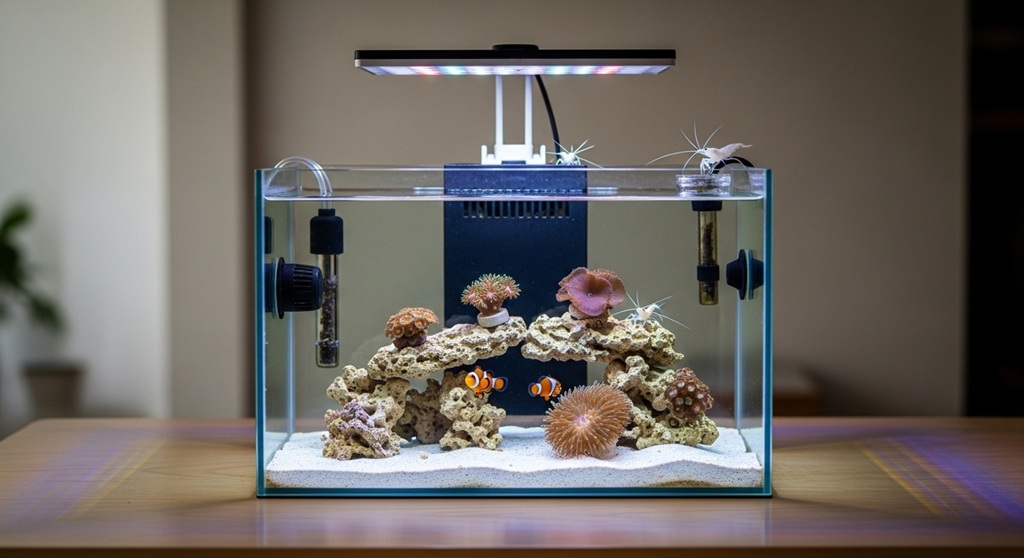
A nano reef tank starter kit is a compact saltwater aquarium setup that typically ranges from 5 to 40 gallons and includes essential components such as filtration, lighting, and a tank. These kits simplify the process of starting a reef aquarium because most critical equipment is already included.
Many beginners choose a small reef aquarium kit because it requires less space, costs less to start, and is easier to manage compared to large reef systems. With proper setup and maintenance, a nano marine tank can support colorful corals, small fish, and invertebrates while delivering the beauty of a full reef ecosystem.
Interest in nano aquariums has increased significantly in recent years. According to aquarium industry reports from the American Pet Products Association, over 12 million U.S. households keep saltwater aquariums, and compact tanks are one of the fastest-growing segments because urban living spaces are shrinking.
However, choosing the right starter kit is not always straightforward. Many beginners buy the first kit they see and later realize it lacks key equipment or stability. This guide explains how to choose the best nano reef tank starter kit so you can build a healthy marine environment from the beginning.
Why Is Choosing the Right Nano Reef Tank Starter Kit Important?
Short answer: The right kit prevents costly mistakes and creates a stable environment for marine life.
Saltwater aquariums are more sensitive than freshwater systems. Small mistakes in equipment selection can lead to water instability, algae outbreaks, or livestock loss.
The Problem
Many beginners underestimate how sensitive reef ecosystems are. A poorly equipped small reef aquarium kit may include weak filtration, low-quality lighting, or no space for upgrades.
The Agitation
When these systems struggle, hobbyists often face problems such as:
- Rapid water parameter swings
- Algae blooms
- Coral stress or bleaching
- Fish health issues
Because a nano marine tank contains less water, even small changes in salinity or temperature can impact livestock quickly.
The Solution
Choosing a reliable starter kit with strong filtration, reef-grade lighting, and upgrade potential improves stability. This reduces stress for both the aquarist and the marine life.
A well-designed nano kit allows beginners to focus on learning reef care rather than constantly fixing equipment issues.
What Size Nano Reef Tank Should Beginners Choose?
Short answer: Beginners should choose a nano reef tank between 15 and 30 gallons because it balances stability and manageable maintenance.
Tank size directly affects water stability. Smaller tanks are easier to place but harder to keep stable.
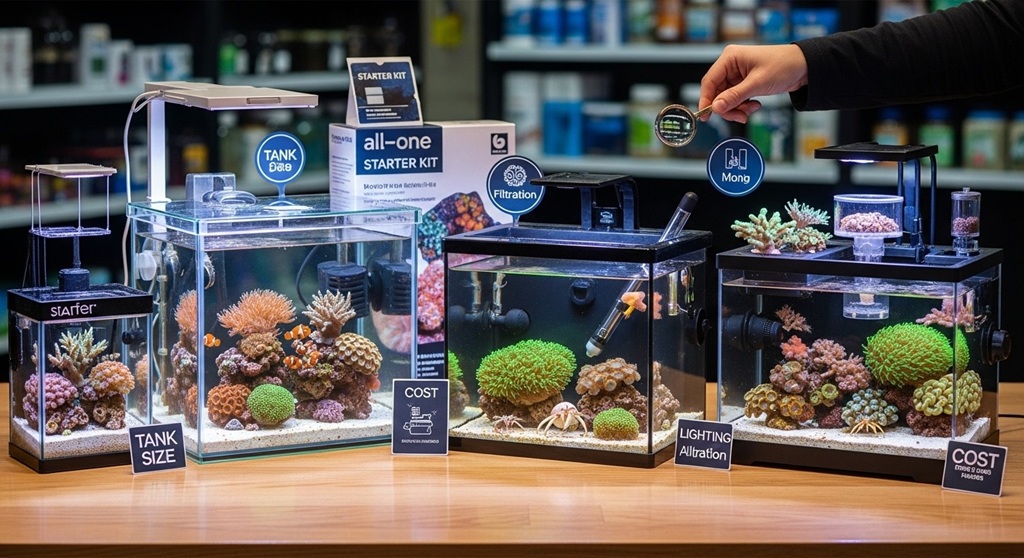
Typical Nano Reef Tank Sizes
| Tank Size | Difficulty Level | Best For |
|---|---|---|
| 5–10 gallons | High | Experienced hobbyists |
| 15–20 gallons | Moderate | Beginners with limited space |
| 25–40 gallons | Lower | Most beginner reef keepers |
Although extremely small aquariums may look attractive, beginners often struggle with them. A slightly larger nano marine tank offers more stable water chemistry and more room for livestock.
What Equipment Should a Good Nano Reef Tank Starter Kit Include?
Short answer: A quality kit should include a tank, filtration system, LED lighting, circulation pump, and heater.
These components create the foundation of a healthy reef environment.
Essential Equipment Checklist
- Glass or acrylic aquarium
- Integrated filtration system
- Reef-safe LED lighting
- Water circulation pump
- Reliable heater
- Thermometer
- Filtration media compartments
Many modern small reef aquarium kits come with built-in filtration chambers, which simplify maintenance and improve water clarity.
Lighting is particularly important. Corals depend on photosynthesis through symbiotic algae called zooxanthellae. Without proper lighting spectrum and intensity, corals cannot survive.
Which Lighting System Works Best for Nano Reef Tanks?
Short answer: Reef-grade LED lighting is the best option because it provides the correct spectrum and energy efficiency.
Modern reef aquariums rely heavily on LED lighting technology. LEDs produce less heat and allow precise spectrum control compared to older lighting systems.
Benefits of LED Lighting
- Lower energy consumption
- Adjustable color spectrum
- Long lifespan (often 30,000–50,000 hours)
- Reduced heat generation
Many popular nano reef kits include programmable LED systems that simulate sunrise and sunset cycles.
This natural light cycle reduces stress for fish and corals while enhancing coloration.
How Important Is Filtration in a Nano Marine Tank?
Short answer: Filtration is critical because nano tanks accumulate waste quickly.
A strong filtration system removes organic waste, maintains water clarity, and prevents ammonia buildup.
Three Main Types of Filtration
- Mechanical filtration – Removes particles and debris.
- Biological filtration – Beneficial bacteria convert ammonia into nitrate.
- Chemical filtration – Activated carbon or media removes toxins.
Many nano reef tank starter kits use an all-in-one (AIO) filtration system with rear compartments.
This design hides equipment while keeping the display area clean.
What Livestock Works Best in a Small Reef Aquarium Kit?
Short answer: Choose small, peaceful species that thrive in compact environments.
Nano aquariums support limited livestock, so careful selection is essential.
Common Fish for Nano Reef Tanks
- Clownfish
- Firefish goby
- Tailspot blenny
- Yellow clown goby
Beginner-Friendly Corals
- Zoanthids
- Mushroom corals
- Green star polyps
- Soft leather corals
These species adapt well to nano reef environments and tolerate minor fluctuations better than sensitive coral species.
What Maintenance Does a Nano Reef Tank Require?
Short answer: Regular water changes and parameter monitoring are essential.
Because a nano marine tank holds less water, maintenance must be consistent.
Typical Weekly Tasks
- 10–20% water change
- Check salinity levels
- Clean algae from glass
- Replace filter media if needed
Key water parameters include:
- Salinity: 1.024–1.026
- Temperature: 24–26°C
- pH: 8.1–8.4
- Ammonia: 0 ppm
Stable parameters create a healthy environment where fish and corals thrive.
What Are the Most Common Beginner Mistakes with Nano Reef Tanks?
Short answer: Overstocking, poor filtration, and skipping maintenance cause most failures.
New reef hobbyists often rush the process. Reef aquariums require patience.
Common Mistakes
- Adding fish too quickly
- Choosing weak lighting
- Overfeeding livestock
- Ignoring water testing
Successful reef tanks develop slowly. The biological filtration system needs time to mature before adding sensitive animals.
Are Nano Reef Tank Starter Kits Cost-Effective?
Short answer: Yes, but long-term costs still exist.
A starter kit is usually cheaper than building a system from scratch.
Typical Cost Breakdown
| Item | Estimated Cost |
|---|---|
| Nano reef starter kit | $150–$600 |
| Live rock & sand | $50–$150 |
| Salt mix | $20–$40 |
| Livestock | $50–$200+ |
Even though nano tanks are smaller, quality equipment still matters. Investing in reliable gear prevents costly replacements later.
Conclusion: How Can You Successfully Start a Nano Reef Tank?
Choosing the best nano reef tank starter kit is the first step toward building a thriving marine ecosystem at home.
The ideal small reef aquarium kit includes reliable filtration, reef-grade LED lighting, and enough space to maintain stable water parameters. While compact aquariums may look simple, they require careful planning and consistent maintenance.
The key is balance. Select a tank size that provides stability, choose beginner-friendly livestock, and maintain consistent water quality.
When done correctly, a nano marine tank becomes more than a hobby. It becomes a living display of ocean biodiversity.
Ready to start your reef journey? Research quality starter kits, plan your livestock carefully, and begin building your own thriving nano reef ecosystem today.
Frequently Asked Questions About Nano Reef Tank Starter Kits
Is a nano reef tank good for beginners?
Yes, nano reef tanks can work for beginners if the system includes reliable filtration and lighting. A tank between 15 and 30 gallons offers a good balance between stability and space efficiency.
How long does it take to cycle a nano marine tank?
Most nano reef aquariums take about 3 to 6 weeks to complete the nitrogen cycle. During this period beneficial bacteria develop and convert toxic ammonia into nitrate.
How many fish can a nano reef tank hold?
The number depends on tank size. A 20-gallon nano reef tank usually supports 2–3 small fish comfortably without overloading the filtration system.
Do nano reef tanks need protein skimmers?
Protein skimmers are optional for smaller tanks but helpful for maintaining water quality. Many hobbyists rely on regular water changes instead.
What is the best coral for beginners?
Soft corals such as zoanthids, mushroom corals, and green star polyps are considered beginner-friendly because they tolerate minor water fluctuations.
How often should water be changed in a nano reef tank?
Most aquarists perform 10–20% weekly water changes. This helps maintain stable water chemistry and removes accumulated nutrients.
Can a nano reef tank survive without live rock?
Live rock is strongly recommended because it provides natural biological filtration and beneficial bacteria that stabilize the aquarium ecosystem.
Read More Also: How to Rig the Perfect Surf Fishing Setup for Pompano
Find out: How to Select the Best Junior Golf Set for Teens
Sorry, the comment form is closed at this time.