



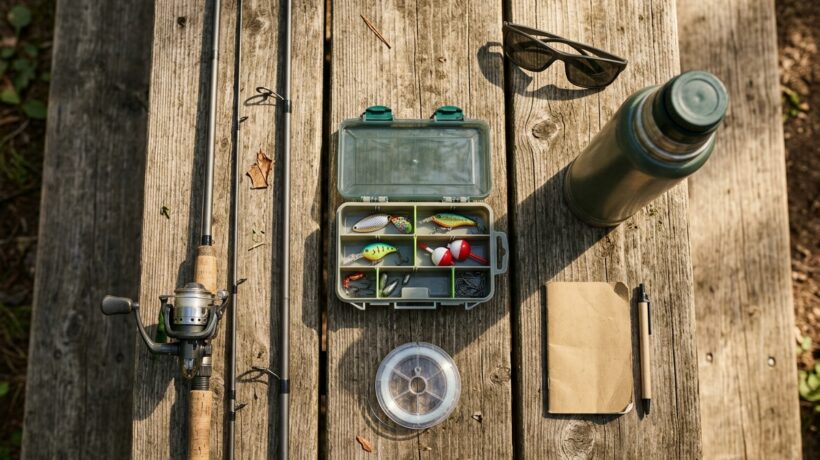
A tackle shop’s aisle can make a simple weekend trip feel like an expensive project. Anglers often walk in needing one thing and leave with three bags of gear they will not use until next season. The fix is not to shop less carefully but to plan the trip first and buy second. That planning starts with terminal tackle, because hooks are the cheapest part of the setup and the easiest place to overspend and overthink. Understanding how sizes work, including the difference between 4 0 fishing hooks and their neighbors on the size chart, keeps you from buying three packs when one will do. Here is how to build a weekend trip around the gear you can actually justify.
Quick Answer
Plan the trip around a specific species, location, and season, then buy only the terminal tackle and bait that match. Reuse rods, reels, and line you already own, set a firm gear budget before you shop, and limit hooks to one or two sizes that fit your target fish. A two-day trip rarely justifies more than a small plano box of tackle. The biggest savings come from skipping “just in case” items and packing consumables like line, bait, and snacks instead.
Key Takeaways
- Choose the fish and water first; gear decisions follow from that, not the other way around.
- Hooks, sinkers, and swivels cost little individually but add up fast when you buy multiple sizes “just in case.”
- Your existing rod and reel almost always work for a weekend trip — replacing them is rarely a budget necessity.
- Set a hard dollar limit for tackle before you enter a store or open an online cart.
- Spend on line, bait, and consumables you will actually use; skip duplicates of tools you already own.
Start With the Trip, Not the Tackle
The fastest way to waste money on gear is to buy before you know what you are fishing for. Decide four things first: the species, the water (lake, river, pond, surf, pier), the season, and whether you are fishing from shore or a boat. Those four answers eliminate most of the tackle aisle instantly.
A weekend trip targeting panfish in a local pond needs tiny hooks, light line, and a bobber setup. A trip chasing catfish on a river at night needs heavier line, circle hooks, and weights that hold bottom. Same weekend, same budget, completely different shopping list. Once you lock the target, you can walk past 80 percent of the store without a second thought.
Write the plan down. A one-page trip sheet with species, location, dates, and fishing method prevents impulse purchases better than willpower does.
Build a Realistic Budget Before You Shop
Set three separate numbers: travel, food, and tackle. Tackle is usually the smallest of the three, and treating it as a fixed line item stops it from quietly absorbing the others.
A reasonable weekend tackle budget for a casual angler typically covers:
- One or two packs of hooks in a single size
- A small assortment of sinkers or split shot
- Swivels or snap swivels
- Fresh line if your current line is older or damaged
- Bait, whether live, cut, or artificial
Everything else — extra lures, a backup reel, a second rod, a new tackle bag — is optional. If an optional item pushes you over budget, it does not come on this trip. The trip is two days. The gear can wait until you know you need it.
Why One Hook Size Beats a Dozen
Hooks are where budget anglers either save the most or waste the most, mostly because size charts confuse people. Hook sizes run from small numbers up to larger ones, and the notation flips depending on whether the size has a zero after it. A 4/0 hook is larger than a 1/0 hook, which is larger than a size 4 hook. That labeling trips up almost everyone the first time.
For a weekend trip, pick one hook size that matches your target fish’s mouth and your bait. A single size covers more situations than beginners expect, because bait size can be adjusted to compensate. Carrying four sizes of the same hook style rarely helps — you use one, and the rest sit in the box until they rust.
Match Hook Size to Bait and Target
Small live bait, dough baits, and panfish presentations usually call for small hooks. Larger cut bait, whole shrimp, or big soft plastics call for larger hooks. Circle hooks work well for catch-and-release and for species that tend to swallow bait. J-hooks are more versatile for general use but require quicker hooksets.
When Buying Two Sizes Is Justified
Two hook sizes make sense on a weekend trip only when you are genuinely fishing two different presentations or two different species. If you plan to fish for bluegill in the morning and bass in the afternoon, a small hook and a medium hook both earn their place. Otherwise, one size is enough.
Reuse What You Already Own
The highest hidden cost in fishing is replacing gear that still works. A rod and reel from a few seasons ago will almost certainly handle a weekend trip unless it is visibly damaged or the drag has failed. Check the guides for cracks, run a fingernail along the line to feel for rough spots, and test the drag by pulling line off by hand. If everything passes, use it.
The same goes for tools. Pliers, a net, a small knife, and a stringer are not things you need duplicates of. If you already own one of each, you are packed. Buying a “better” version before a trip adds cost without adding fish.
What is worth replacing: line that is more than a season old, hooks that show rust, and any bait that has dried out or spoiled. These are consumables, not investments, and replacing them is cheaper than losing fish to failure.
Pack a Minimal Weekend Tackle Kit
A weekend kit fits in a small box or soft bag and covers almost every casual trip. Aim for the following:
- One rod and reel that matches your target species
- One pack of hooks in your chosen size
- A small selection of split shot or sliding sinkers
- Swivels and snap swivels
- Bobbers or floats if you plan to fish under a float
- Two or three lures or jigs, not ten
- Pliers, line clippers, and a small towel
- Bait appropriate to the species
- Water, snacks, sunscreen, and a hat
Notice what is not on the list: a second rod, a backup reel, a full lure box, a fillet knife you will not use on a catch-and-release trip, or a headlamp you already own. Each of those is fine to own. None of them needs to come on this particular weekend.
Common Budget Mistakes to Avoid
Most overspending happens in predictable patterns. Recognize them before you shop and you will leave the store with money still in your pocket.
- Buying for a species you are not fishing. A sale on musky lures is not a reason to buy them for a panfish trip.
- Stocking up on hook sizes you might need. You will use one. Buy one.
- Replacing working gear. A new reel does not catch more fish than the one already on your rod.
- Shopping without a list. The tackle aisle rewards browsers and punishes budgets.
- Ignoring consumables. Old line and rusty hooks cost fish, not money. Replace those first.
- Buying a “starter kit” when you already have the pieces. Kits exist for people starting from zero.
A Quick Decision Rule
Before adding anything to your cart, ask two questions: will I use this on this specific trip, and do I already own something that does the same job? If the answer to the first is no, or the second is yes, put it back.
Where to Spend and Where to Save
Some parts of a fishing setup are worth spending on, and others are not, and the difference is usually how often you use them.
| Item | Spend or Save | Why |
|---|---|---|
| Fishing line | Spend | Fresh, quality line directly affects hooksets and breakoffs. |
| Hooks | Save | Inexpensive and effective; one good size is enough. |
| Rod and reel | Save | Reuse existing gear unless something is broken. |
| Bait | Spend | Fresh, appropriate bait matters more than tackle variety. |
| Lures | Save | Two or three matched to your species cover most trips. |
| Tools (pliers, net, knife) | Save | You already own them; duplicates add cost without value. |
The pattern is simple: spend on things that touch the fish directly and wear out; save on things that sit in a bag.
Frequently Asked Questions
How much should I budget for a weekend fishing trip?
For a casual trip, travel and food usually dominate the cost. Tackle can stay small if you reuse existing rods and reels and buy only hooks, sinkers, line, and bait. Set the tackle budget as a fixed number before shopping rather than estimating afterward.
Do I need multiple hook sizes for one weekend?
Only if you are genuinely targeting two different species or fishing two very different presentations. Otherwise, one hook size matched to your bait and target fish will handle the whole trip.
Should I buy new line before every trip?
Not necessarily. Replace line if it is more than a season old, feels rough, has visible damage, or was stored in heat and sunlight. Otherwise, inspect and reuse it.
Is it cheaper to buy a prepackaged tackle kit?
Kits make sense for someone starting from zero. If you already own a rod, reel, and basic tools, buying individual items you actually need is usually cheaper and avoids filler tackle that never gets used.
What gear do I actually need for a two-day trip?
One rod and reel, one hook size, a few sinkers and swivels, two or three lures or jigs, bait, pliers, and a small towel. Everything beyond that is optional and can usually wait until you know you need it.
How do I stop myself from overspending in a tackle shop?
Make a written list before you go and treat it as a hard boundary. Shop by the list, not by the aisle. If a sale item is not on the list and not for this trip, it stays on the shelf.
Conclusion
A weekend fishing trip does not require a full tackle overhaul. Decide the species and location first, set a fixed tackle budget, and buy only what this specific trip requires. Reuse the rod, reel, and tools you already own, replace worn line and rusty hooks, and pick one hook size that fits your target. That approach keeps costs low and forces you to focus on technique rather than tackle variety. The next step is simple: write your trip sheet, draft a short list, and shop from it.