
16 Sep Gaming Platforms Explained: How to Choose the Right One for You
Key Takeaways
- There are four main gaming platforms today: PC, console, mobile, and cloud.
- PC gaming offers power, upgrades, and a huge game library.
- Consoles are simple, affordable, and great for couch play with friends.
- Mobile gaming is the most popular way to play, and it fits busy lives.
- Cloud gaming lets you stream big games without costly hardware.
- The best platform depends on your budget, your favorite games, and your lifestyle.
Last year, my younger cousin asked me for gaming advice. He stood in an electronics store, torn between a new console and a gaming PC. He had a budget, a list of favorite games, and zero patience for tech jargon. I remembered feeling the same way years ago. Choosing a platform can feel confusing, but it does not have to be.
Today, more than 3.3 billion people around the world play games, according to market research firm Newzoo. That means billions of people have faced this exact choice. Therefore, this guide will break down every major platform in plain language. By the end, you will know exactly which one fits your life.
What Is a Gaming Platform?
A gaming platform is the system you use to play games. It includes the hardware, the software, and the store where you buy games. However, not all platforms work the same way. Each one offers a different mix of price, power, and convenience.
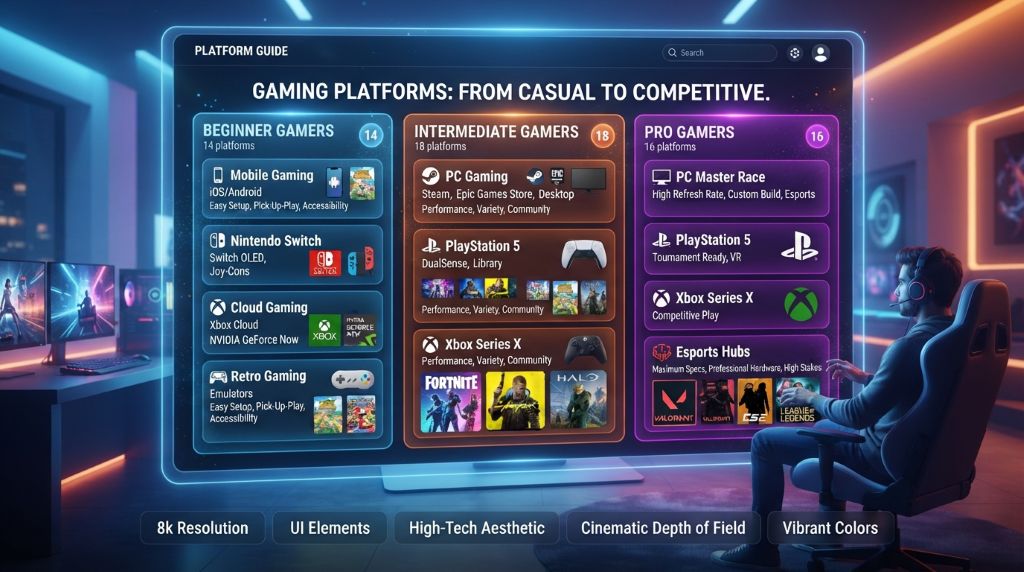
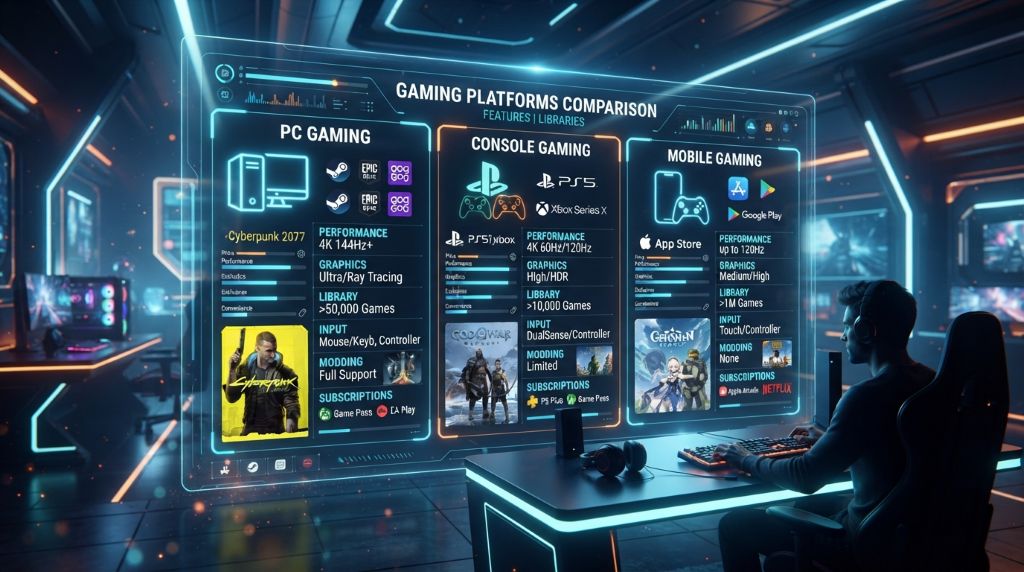
There are four main types of platforms. First, PCs give you full control and top performance. Second, consoles like PlayStation and Xbox focus on easy setup. Third, mobile devices put games in your pocket. Fourth, cloud services stream games over the internet, so no strong hardware is needed.
The gaming market is bigger than movies and music combined. In fact, Newzoo reports that mobile games generate nearly half of all gaming revenue worldwide. Consoles and PCs split most of the rest. Additionally, each platform keeps growing in its own direction. Therefore, there is no single “best” platform. There is only the best platform for you.
Understanding these differences saves you money. It also prevents the frustration of buying hardware that cannot run the games you love. So, let us look at each option in detail.
PC Gaming: Power, Choice, and Upgrades
PC gaming remains the top choice for players who want control. You can upgrade parts over time instead of buying a whole new system. Additionally, PCs handle more than games. You can work, stream, and create on the same machine.
The game library is enormous. Steam alone reports over 130 million monthly active users, according to Valve. Moreover, PC players enjoy mods, which are fan-made changes that add new life to old games. Competitive players also prefer PCs. Many esports titles, like Counter-Strike and Valorant, run best on them with higher frame rates and custom settings.
I made the switch to PC during college. My old laptop could barely run anything, so I saved up and built my first machine. It was stressful at first. However, watching it run games smoothly for the next six years made every dollar worth it.
Still, PCs have downsides. A good gaming PC often costs more upfront than a console. You may also need to tweak settings for some games. Therefore, PCs suit players who enjoy technology and want long-term value.
Console Gaming: Simple, Social, and Great Value
Consoles are built for one job: playing games. You plug them in, update the system, and start playing within minutes. There are no driver updates or graphics settings to worry about. This simplicity is why consoles remain so popular.
The current generation includes the PlayStation 5, Xbox Series X and S, and the Nintendo Switch. Sony announced that PS5 sales passed 50 million units within about three years, which shows strong demand. Each console also has exclusive games you cannot play elsewhere. For example, Nintendo offers Mario and Zelda, while PlayStation has God of War and The Last of Us.
Consoles shine in social settings, too. Split-screen couch play is easy, and controllers work out of the box. Additionally, consoles usually cost less than a gaming PC at the same performance level.
My first console was a PlayStation 2. My friends and I spent entire weekends playing soccer games on one couch. Those memories explain why I still keep a console next to my PC today.
However, consoles have limits. You cannot upgrade them, and some online services require a paid subscription. Therefore, consoles are best for players who value ease over customization.
Mobile Gaming: Games in Your Pocket
Mobile gaming is the largest gaming market in the world. Almost everyone owns a smartphone, so almost everyone is a potential gamer. Additionally, mobile games fit into small pockets of free time. You can play during a commute, a lunch break, or while waiting in line.
Most mobile games are free to download. They earn money through ads and optional in-game purchases. This model lowers the entry barrier to almost zero. Titles like Candy Crush, Genshin Impact, and Clash Royale attract hundreds of millions of players.
However, mobile gaming has trade-offs. Phones are not designed mainly for games, so long sessions can drain batteries and heat devices. Touch controls also feel less precise than a keyboard or controller. Furthermore, many free games push purchases aggressively, which can frustrate players.
Mobile gaming suits casual players and busy people. It also works well as a second platform. For example, I play puzzle games on my phone while my main setup stays at home. Therefore, mobile is a perfect starting point, but hardcore players may eventually want more power.
Cloud Gaming: Play Without Expensive Hardware
Cloud gaming is the newest option, and it changes the rules. Instead of running games on your device, a powerful remote server runs them for you. The video streams to your screen, similar to watching a movie on Netflix. Your button presses travel back instantly.
Popular services include Xbox Cloud Gaming, NVIDIA GeForce Now, and Amazon Luna. These services let you play big titles on old laptops, tablets, or even smart TVs. Therefore, cloud gaming removes the biggest barrier: hardware cost. A five-year-old phone can stream a brand-new game this way.
I tested cloud gaming on a basic laptop last summer. I expected lag, but a fast connection delivered smooth play. It felt like magic. Still, my experience depended heavily on my internet speed.
That is the main catch. Cloud gaming needs a fast, stable internet connection, ideally at least 15 to 25 Mbps. Slow connections cause lag and blurry visuals. Additionally, your game library depends on each service’s catalog. Therefore, cloud gaming works best for players with strong internet and flexible tastes.
How to Choose the Right Platform for You
Now you know the options, so let us match them to your life. Use this numbered checklist before you spend any money.
- Set your budget first. Consoles start around $300 to $500. Gaming PCs often cost $800 or more. Mobile costs nothing extra if you own a phone.
- List your favorite games. Check which platform runs them. Some titles stay exclusive to one system.
- Ask your friends what they play. Gaming together is more fun, and many games support cross-play across platforms.
- Measure your free time. Busy schedules favor mobile or cloud gaming. Long sessions favor PC or console.
- Consider your comfort with technology. If you hate settings and updates, choose a console. If you enjoy tweaking, choose a PC.
- Test before you commit. Visit a friend, a store demo, or use a cloud trial. Real experience beats online reviews.
Additionally, remember that platforms are not enemies. Many players own two systems. A common setup pairs a console for living-room fun with a phone for quick sessions. Therefore, think of this choice as your “main” platform, not your only one.
For deeper market data and trends, the Entertainment Software Association publishes yearly research on how and why people play. Reading it can help you see where the industry is heading before you invest.
Final Thoughts: Your Perfect Platform Is the One You Actually Use
Choosing a gaming platform comes down to honesty about your needs. PCs reward tinkerers with power and flexibility. Consoles deliver easy, affordable fun. Mobile fits busy lives and tiny budgets. Cloud gaming erases hardware limits, if your internet can keep up. If you’re exploring specific games before choosing your platform, guides such as how to unlock characters in Mortal Kombat 11 can also help you understand what a game offers.
There is no wrong answer here. There is only the answer that fits your games, your money, and your time. Start small if you feel unsure. You can always expand later.
Now I want to hear from you. Which platform do you play on, and why did you choose it? Share your story in the comments below. Additionally, if this guide helped you, pass it along to a friend who is stuck choosing. Your share might save them hours of research.
Frequently Asked Questions
What is the cheapest gaming platform to start with?
Mobile gaming is the cheapest since most people already own a smartphone. Many quality games are free. A used console is the next affordable option.
Is PC gaming really better than console gaming?
Neither is truly better. PCs offer more power, upgrades, and mods. Consoles offer lower cost, simplicity, and exclusives. Your priorities decide the winner.
Do I need fast internet for cloud gaming?
Yes. A stable connection of at least 15 to 25 Mbps is recommended. Slower speeds cause lag, stuttering, and lower picture quality.
Can I play with friends who use a different platform?
Often, yes. Many popular games support cross-play, which connects players across PC, console, and mobile. Check each game’s settings before buying.
Can I use one platform for both casual and competitive gaming?
Yes. PCs handle both best because they support casual titles and competitive games at high frame rates. Consoles also support both, with slightly fewer performance options.
Sorry, the comment form is closed at this time.