
14 Sep What the Law Says About Bike Lights and Night Riding Visibility
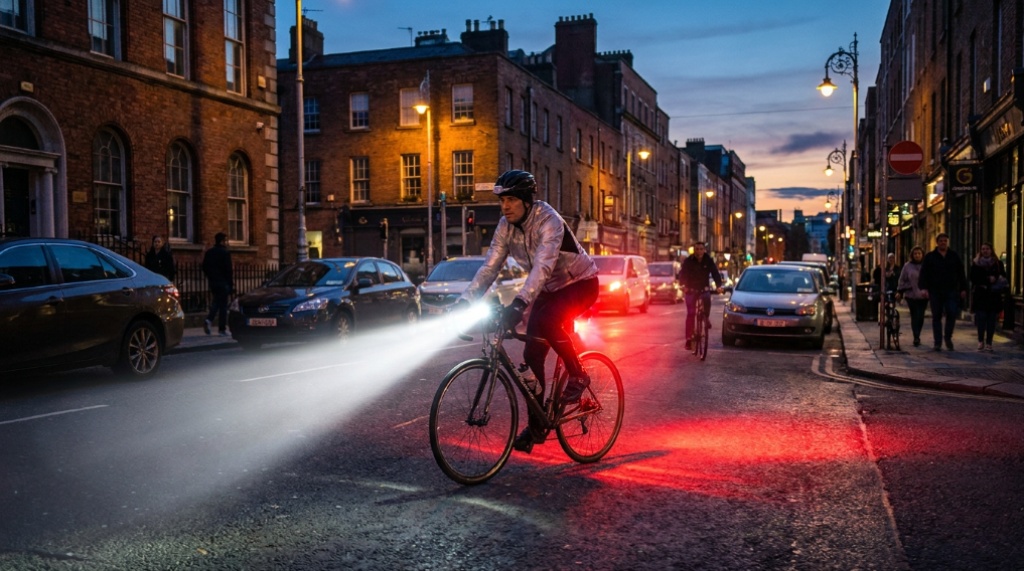
Most cyclists assume a small blinking light is enough to keep them legal and visible after dark. Then they read a local ordinance, get stopped by an officer, or worse, realize a driver never saw them at all. The truth is that bike light laws vary significantly by state and city, and legal minimums often fall far short of what actually keeps you safe. Whether you are commuting home at dusk or riding unlit trails at night, understanding both the legal requirements and the real-world visibility gap matters. Many riders close that gap with an ultra bright front and rear light setup that exceeds minimum standards, but knowing what the law actually requires comes first.
Quick Answer
Most U.S. states require a white front light visible from at least 500 feet and a red rear reflector or light visible from 500 feet when riding at night. Some states and cities mandate a rear light specifically, and a few require lights during daylight or in low-visibility conditions. Legally, a basic light often suffices, but visibility research and crash data consistently show that brighter, flashing, and multi-point lighting significantly improves how quickly drivers notice you. Always check your specific state and local ordinances, since requirements vary.
Key Takeaways
- Legal minimums for bike lights are surprisingly low in most states—often just 500 feet of visibility—but those minimums rarely match real-world safety needs.
- Rear lights are not universally required by state law, though many cities mandate them; a rear reflector alone is often legally sufficient but practically inadequate.
- Flashing or pulsating modes are legal in most places for rear lights but are restricted or discouraged for front lights in some jurisdictions.
- Lights are not just for night—many states require them during low-visibility conditions like fog, rain, or dawn and dusk.
- Exceeding legal minimums with brighter, well-aimed lighting is one of the most effective and inexpensive safety upgrades a cyclist can make.
What Most Bike Light Laws Actually Require
Bike light laws in the United States are set at the state level, with cities and counties sometimes adding stricter rules. Despite the variety, most states follow a similar baseline that traces back to a uniform vehicle code model.
Here is what the typical state statute requires for nighttime riding:
- A white light on the front, visible from a minimum distance (usually 500 feet)
- A red reflector on the rear, visible from 500 feet when illuminated by a vehicle’s headlights
That is it in many states. Notice what is missing: a rear light is not always legally required, and there is no brightness standard measured in lumens. The law cares about visibility distance, not output power.
Where State Laws Diverge
A handful of states go further. Some require an actual red rear light rather than just a reflector. Others specify that the front light must be visible from 300 feet rather than 500. A few states, including California, require lights not only at night but also during conditions of reduced visibility, such as fog or rain.
Some states also address side visibility, requiring reflectors on pedals or the sides of the bike. These details rarely come up until a rider is cited or involved in an incident, which is why checking your state’s actual statute—not a summary blog post—is worthwhile.
Local Ordinances Can Be Stricter
Even if your state only requires a front light and rear reflector, your city may require more. Dense urban areas sometimes mandate front and rear lights, flashing or steady, and may set specific hours. A rider can be fully compliant with state law and still violate a city ordinance.
The practical takeaway: check both your state vehicle code and your city’s municipal code. A quick search for “[your city] bicycle light ordinance” usually surfaces the relevant language.
Why Legal Minimums Fall Short of Real Safety
A light that satisfies the legal visibility standard is not necessarily a light that keeps you safe. This is the single most important distinction in the entire topic, and it is where most articles stop short.
The 500-foot visibility requirement was written decades ago, when traffic speeds, road complexity, and driver distraction levels were very different. It answers a narrow legal question: can a person with normal vision see this light from a specified distance under ideal conditions? It does not answer the safety question: will a distracted driver traveling at 45 mph actually notice and react to me in time?
The Perception-Reaction Problem
When a driver approaches a cyclist at night, several things have to happen in sequence. The light has to enter the driver’s field of view. The driver has to perceive it as a cyclist, not a distant streetlight or a reflection. The driver has to decide what to do. Then the driver has to act.
A dim or poorly aimed light can fail at the very first step. It may technically be visible from 500 feet, but if it blends into background clutter or appears too small to register as a person, the driver’s brain may not flag it as a threat until the distance has closed dramatically.
What Actually Improves Detection
Research on cyclist visibility points to a few consistent factors that improve how quickly drivers detect a rider:
- Brightness: Higher-output lights are detected at greater distances and in more cluttered environments.
- Flashing or modulating rear lights: These draw attention more effectively than steady rear lights in many conditions, though steady modes can help drivers judge distance.
- Multiple light points: A single light is easier to misidentify. Front and rear lights combined with reflective material on the body and pedals create a more recognizable human silhouette.
- Aiming: A bright light pointed at the ground wastes output. A bright light pointed into drivers’ eyes creates glare and can be dangerous. Aim matters as much as power.
This is why many riders treat the legal minimum as a floor, not a target. A light designed to be genuinely bright in real conditions—not just legally visible—closes most of the safety gap that the statute ignores.
Front vs Rear Lighting: Different Jobs, Different Rules
Front and rear lights serve different purposes and are governed by different expectations, both legal and practical.
| Factor | Front Light | Rear Light |
|---|---|---|
| Primary legal requirement | Required in nearly all states at night | Often a reflector is enough; light required in some states and cities |
| Main purpose | See the road and be seen by oncoming traffic | Be seen by traffic approaching from behind |
| Common modes | Steady preferred; flashing restricted in some areas | Flashing widely accepted and often more noticeable |
| Typical legal visibility distance | 500 feet | 500 feet (reflector or light) |
| Practical priority | Enough output to illuminate hazards at speed | Enough brightness and motion to be noticed early |
Why Rear Lighting Is Often Underrated
Many cyclists invest in a strong front light for seeing the road and treat the rear as an afterthought. Statistically and practically, the rear is where a disproportionate share of night collisions occur, because drivers approach from behind and may not expect a slow-moving vehicle.
A rear reflector satisfies the law in many states. It does not satisfy the reality of a driver who is tired, distracted, or looking past you. A dedicated rear light—especially one with a flashing or pulsing mode—is one of the highest-value safety purchases a night rider can make.
Front Light Aiming: A Legal and Safety Issue
An overly bright front light aimed too high can blind oncoming drivers, which is both a safety hazard and, in some jurisdictions, a potential citation for creating glare. Aim the front light so the beam hits the road several feet ahead, not the eyes of people approaching.
Flashing vs Steady: What the Law Says and What Works
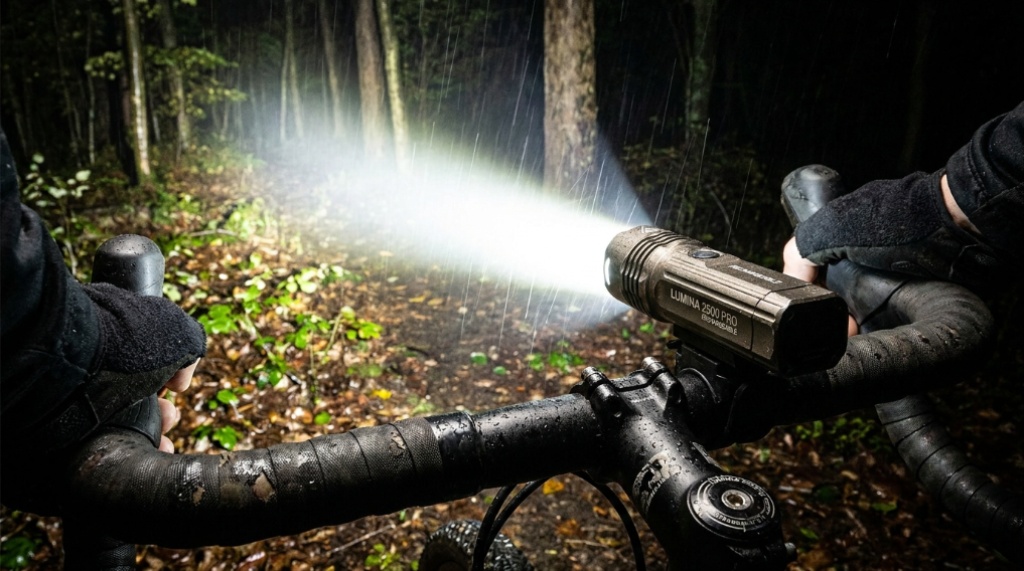
Flashing lights are a common point of confusion. The legal treatment varies, and the safety trade-offs are real.
For rear lights, flashing modes are legal in most jurisdictions and are widely considered effective at attracting attention. The intermittent motion makes the light stand out against steady background lights.
For front lights, the situation is more mixed. Some jurisdictions restrict or prohibit flashing front lights because they can be disorienting to oncoming traffic and make it harder to judge the cyclist’s speed and distance. A steady front light is generally the safer and more legally defensible choice, with a flashing rear light complementing it.
A practical approach many riders use: steady front light for seeing and being tracked, flashing rear light for being noticed, and a backup or secondary rear light for redundancy, for riders looking to balance evening street commutes with alternative cycling styles, check out our guide on lightweight bmx bikes for every rider to explore different performance options.
Common Mistakes That Undermine Both Legality and Safety
Even riders who buy good lights often make avoidable errors. These are the ones that come up most often.
- Running lights only when it is fully dark. Dawn, dusk, fog, and rain are some of the highest-risk conditions, and several states require lights during reduced visibility, not just at night.
- Relying on a single rear reflector. It meets the letter of the law in many places but is far less effective than an active light.
- Mounting lights too low or too high. Extremely low lights can be hidden by road debris or parked cars; extremely high lights can glare into drivers’ eyes.
- Forgetting to charge or replace batteries. A dead light is worse than no light in some ways, because the rider may believe they are visible when they are not.
- Ignoring side visibility. Most light laws focus on front and rear, but intersections are where side visibility matters most. Reflective material on pedals, ankles, and the frame helps.
- Assuming a bright light compensates for poor positioning. Riding predictably, using the lane appropriately, and avoiding blind spots still matter more than any light.
How to Choose Lighting That Exceeds the Legal Minimum
If the goal is to be both legal and genuinely visible, a few practical criteria help narrow the choice.
- Check your state and city requirements first. Know the actual rule so you are not cited and so you understand the baseline you are improving on.
- Prioritize a rear light with a flashing mode. This is often the single highest-impact upgrade for night riding.
- Choose a front light bright enough to illuminate the road at your typical speed. A light that is merely visible does not help you see potholes or debris.
- Consider a set rather than mismatched lights. A matched front and rear set is usually designed to work together and simplifies charging and mounting.
- Plan for redundancy. A small backup light or a reflective vest adds a layer of protection if a primary light fails.
- Recharge or replace batteries on a schedule. Treat light maintenance as part of your pre-ride routine, not an afterthought.
The legal minimum exists to establish a baseline, not to define the best practice. Riders who treat it as a starting point rather than a finish line tend to be both more compliant and considerably safer.
Frequently Asked Questions
Are bike lights required during the day?
In most places, no. However, some states and cities require lights during conditions of reduced visibility, such as fog, rain, or heavy overcast. A few jurisdictions also require daytime lights. Check your local ordinance if you ride in low-light conditions regularly.
Is a rear reflector enough, or do I need a rear light?
Legally, a rear reflector satisfies the requirement in many states. Practically, a rear light—especially a flashing one—is far more effective at getting drivers to notice you. Many cyclists use both.
Can I be ticketed for having a light that is too bright?
It is uncommon, but possible in some jurisdictions if the light creates dangerous glare or is aimed improperly. The bigger practical risk is blinding oncoming traffic and reducing your own safety. Aim your front light at the road, not at drivers’ eyes.
Do flashing front lights comply with the law?
It depends on where you ride. Some jurisdictions restrict flashing front lights because they can be disorienting and make it harder to judge distance. A steady front light is generally the safer and more broadly compliant choice.
How often should I replace or recharge my bike lights?
Recharge or replace batteries before every ride if you ride at night regularly, and check function as part of your pre-ride routine. Battery performance degrades over time, so replace aging lights rather than assuming they still hold a full charge.
Do I need lights on a bike path or trail at night?
Many trail and path regulations mirror state vehicle codes and require lights at night. Even where not legally required, lights help you see the path and alert other trail users, including pedestrians and other cyclists.
Conclusion
Bike light laws set a low bar—usually a white front light and a rear reflector visible from 500 feet—and that bar rarely matches what actually keeps you safe after dark. The smart approach is to treat the legal minimum as a baseline, then upgrade with a bright, well-aimed front light, a flashing rear light, and reflective material for side visibility. Check your state and local rules, replace batteries on a schedule, and remember that the best light is the one that is charged, aimed correctly, and noticed in time.
Sorry, the comment form is closed at this time.