
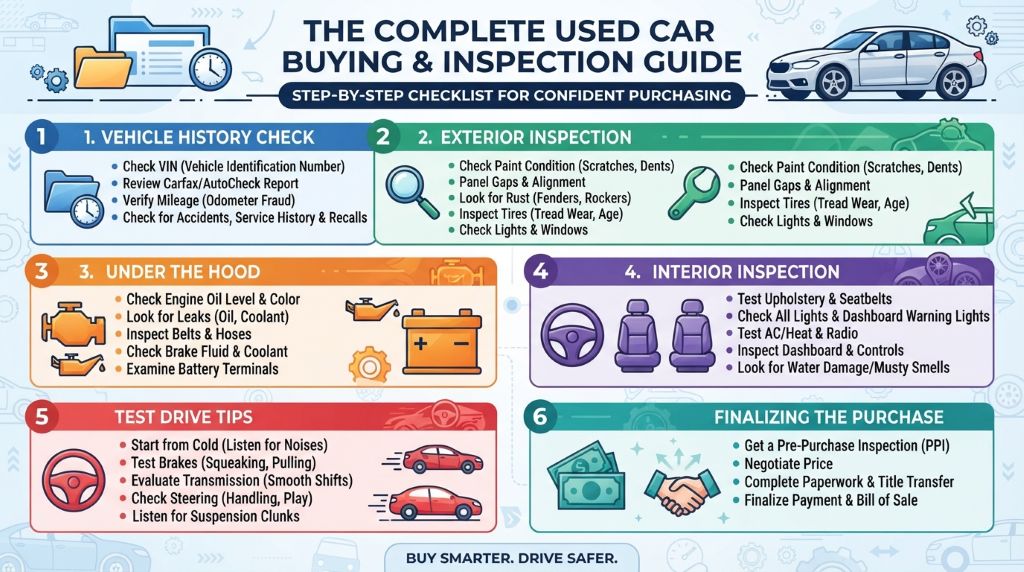
23 Sep Used Cars: Complete Guide to Buying, Inspecting and Owning a Used Vehicle
Key Takeaways
- Used cars lose value more slowly than new models, so buyers keep more money in their pockets.
- A vehicle history report plus a mechanic’s inspection prevents expensive surprises.
- Budget for more than the sticker price; taxes, insurance, and repairs add up fast.
- A cold-start test drive reveals problems that a quick spin around the block hides.
- Verify the title, the VIN, and any open recalls before money changes hands.
Buying used cars can feel like walking through a maze. Prices swing wildly, and sellers rarely point out flaws. However, a clear process removes most of the risk. This guide covers budgeting, shopping, inspecting, and paperwork. Read it before you visit any lot, and you will negotiate with confidence.
Why Used Cars Make Sense Today
The numbers tell the story. S&P Global Mobility reports that vehicles on American roads now average 12.6 years old. Additionally, Experian data shows used vehicles outsell new ones by more than two to one. The math explains why. A new car loses roughly 20 percent of its value within the first year, according to Kelley Blue Book. Therefore, the first owner absorbs the sharpest drop, while the second buyer collects the savings.
The price gap is enormous. Edmunds places the average used vehicle near $25,000, while new models sit above $47,000. That difference can fund years of fuel, insurance, or maintenance. For example, a three-year-old compact SUV often keeps its factory warranty. Meanwhile, certified pre-owned programs add inspections and extended coverage. Modern engines also last longer than ever, so higher mileage no longer means a risky purchase.
My cousin’s Honda Civic proves the point. She bought a six-year-old model instead of a new hatchback and saved over $10,000. The car carried complete service records and passed inspection with minor wear. Today it has passed 150,000 miles and still runs smoothly. Care history, not mileage alone, decides how long a car lasts.
Setting a Realistic Budget First
Start with the total cost of ownership, not the sticker price. AAA’s Your Driving Costs study found that the average driver spends over $12,000 each year on a vehicle. That figure includes fuel, insurance, maintenance, and registration. Therefore, many financial planners suggest keeping the purchase price near 20 percent of your annual take-home pay. A payment that stretches your budget creates stress for years.
Financing deserves careful attention too. Used car loans carry higher interest rates than new car loans, so compare offers from banks and credit unions first. Pre-approval also strengthens your position at the negotiating table. Additionally, set aside a repair fund of 10 to 15 percent of the purchase price. Even reliable cars eventually need brakes, tires, or a battery.
Remember the hidden fees as well. Sales tax, title fees, and dealer charges can add 10 percent or more to the final bill. Insurance premiums also vary sharply between models, so request quotes before you commit. For instance, a sporty coupe often costs far more to insure than a family sedan. A complete budget keeps a good deal from becoming a bad one.
Where to Shop for Used Cars
Each sales channel offers different trade-offs. Franchise dealers sell certified pre-owned vehicles that pass strict factory inspections. These cars cost more, yet the warranties and roadside assistance justify the price for many buyers. Independent lots price their inventory lower and negotiate freely. However, quality control varies from lot to lot, so scrutinize every vehicle.
Private sellers usually offer the lowest prices. Additionally, you can meet the real owner and ask direct questions about maintenance. The downside is simple: private sales provide almost no protection afterward. Online platforms such as CarMax, Carvana, and Facebook Marketplace blend convenience with return policies. CarMax, for instance, allows returns within a limited window, which lowers the risk for first-time buyers.
Whatever channel you choose, order a vehicle history report from Carfax or AutoCheck before you pay. The report reveals accidents, flood damage, title problems, and prior owners. A clean report does not guarantee a perfect car. Nevertheless, a dirty report should end the conversation immediately. Match the source to your personal risk level, and never let excitement rush the decision.
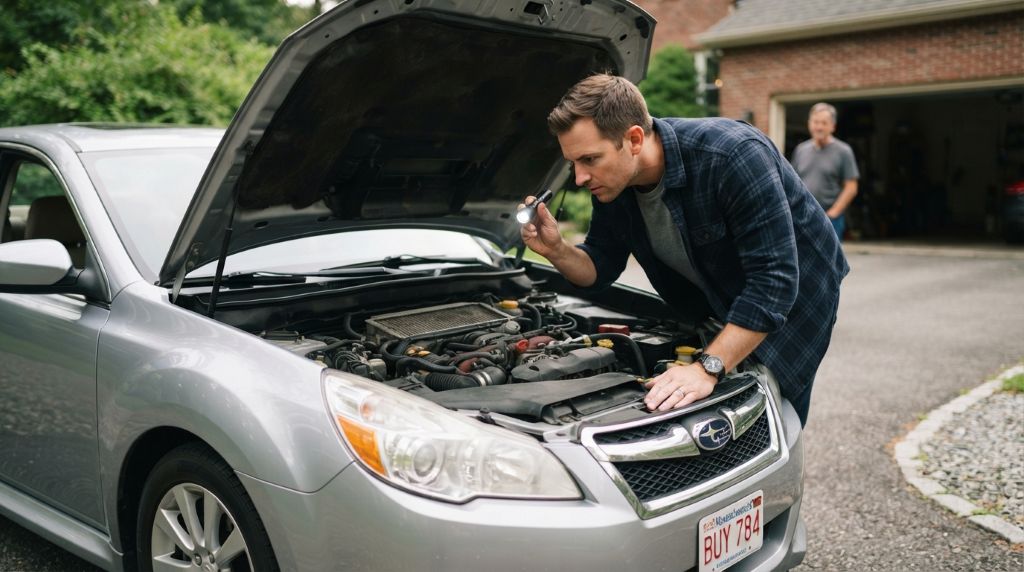
How to Inspect a Used Car Like a Pro
A careful inspection separates smart buyers from sorry ones. Inspect every car in daylight, because shade hides paint flaws and leaks. Bring a flashlight, a rag, and a friend who knows cars. Then work through this checklist:
- Walk around the car and look for mismatched paint, uneven panel gaps, or rust near the wheel wells.
- Crouch behind the car and check the ground for oil, coolant, or transmission fluid spots.
- Pull the oil dipstick; gritty or milky oil signals poor maintenance or a serious leak.
- Check the tires for even tread wear, because uneven wear points to alignment or suspension trouble.
- Test every light, window, lock, seat adjustment, and the air conditioning.
- Sniff for a musty smell inside, which often reveals hidden flood damage.
- Confirm that the VIN on the dashboard matches the title and the door sticker.
One friend skipped the final step on a glossy sedan and paid dearly. The transmission failed within two months and cost him $2,400. As a result, I now insist on a pre-purchase inspection from an independent mechanic before any deal. Most shops charge between $100 and $200 for the service. That small fee saves thousands and gives you leverage during price talks. Sellers who refuse an inspection are telling you something important.
Master the Test Drive and the Paperwork
Never buy a car you have not driven. Start the engine while it is cold, because hidden noises and rough idles appear then. Listen for knocks, squeals, or smoke on startup. During the drive, reach highway speed and feel for vibration or wind noise. Additionally, brake firmly in a safe spot and notice whether the car pulls to one side. Turn the wheel fully at low speed and listen for clicking, which suggests worn joints. Drive over rough pavement and watch how the suspension settles.
Then handle the paperwork with equal care. Verify that the VIN on the title matches the car and that no bank holds a lien. Ask for service records and the owner’s manual. Search the vehicle identification number on NHTSA’s free recall lookup at nhtsa.gov/recalls, because unresolved recalls are common and repairs cost nothing at dealers. Sign a clear bill of sale and confirm the title transfer with your local motor vehicle office. Careful paperwork protects both your money and your legal standing.
Frequently Asked Questions
How many miles are too many for a used car?
No single number disqualifies a car. A vehicle with 120,000 miles and full service records often beats a neglected one with 60,000. Judge maintenance history, not the odometer alone.
What is the best age for a used car?
Most experts recommend models three to five years old. The first owner has already absorbed the steep depreciation, yet the car stays modern and dependable.
Should I buy an extended warranty?
Sometimes. Certified pre-owned cars already include factory coverage, so skip extra plans there. For other vehicles, read the contract closely, because many policies exclude major components.
Is a vehicle history report enough protection?
No. Reports miss unreported accidents and incomplete repairs. Pair the report with a mechanic’s inspection for genuine peace of mind.
Can I return a used car after buying it?
Private sales are final in nearly every case. Some dealers offer short return windows, but cooling-off laws for cars are mostly a myth. Confirm the policy in writing first.
Final Thoughts
Used cars reward patient, informed buyers. Set a full budget, research the market, inspect thoroughly, and demand honest paperwork. If a repair shop damages your vehicle during an inspection or service, knowing what to do if a repair shop damages your car can help you protect your rights and handle the situation properly. The process takes effort, but it saves thousands and prevents heartache. The right car is out there waiting for a careful shopper exactly like you.
Now it is your turn. Have you recently bought a used car, or learned a lesson the hard way? Share your story in the comments below, because your tip might save another reader thousands. Additionally, pass this guide to a friend who is shopping right now.
Sorry, the comment form is closed at this time.