
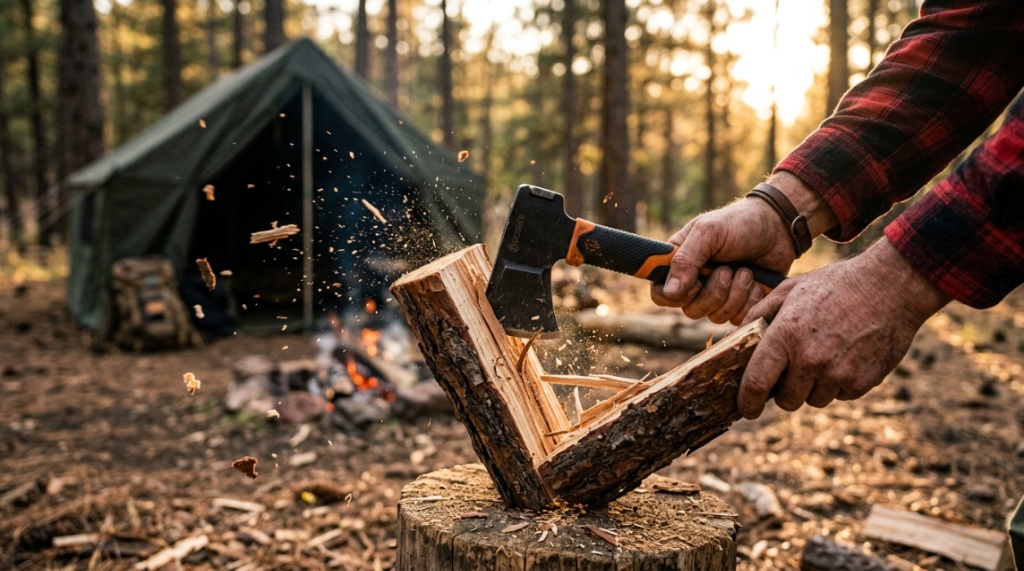
31 May How to Choose the Best Camp Axe for Survival and Camping
Last winter, a friend of mine snapped a cheap axe handle mid-swing at a backcountry campsite in Montana — no backup tool, freezing temperatures, and a pile of unsplit logs. That single moment taught him what every seasoned camper already knows: choosing the best camp axe is not about grabbing whatever looks tough on a store shelf. A reliable camp axe is a compact, single-handed cutting tool designed for splitting kindling, processing firewood, clearing brush, and performing light survival tasks at a campsite. The wrong choice leaves you struggling with dull edges, excessive weight, or a handle that vibrates your joints raw after ten swings. The right choice turns camp chores into effortless routines and could genuinely save your life in an emergency. This guide breaks down every factor — from head geometry to handle material — so you walk away confident in your next purchase.
What Makes a Camp Axe Different From a Full-Size Axe?
A camp axe typically weighs between 1.5 and 2.5 pounds with a handle length of 14 to 19 inches, making it portable enough for a backpack yet powerful enough for campsite wood processing.
Full-size felling axes run 3.5 to 6 pounds with 28- to 36-inch handles. They generate serious splitting force but are impractical for hiking or canoe trips. A camp axe bridges the gap between a heavy-duty hatchet and a full felling axe. It offers enough blade mass to split 6-inch rounds while staying light enough to carry on a multi-day trek.
Key differences include:
- Weight: Camp axes stay under 2.5 lbs total; felling axes exceed 4 lbs
- Handle length: 14–19 inches vs 28–36 inches
- Primary use: Kindling, limbing, light splitting vs felling trees
- Portability: Fits in or straps to a pack vs requires dedicated carry
If your camping style involves car camping with a fire pit, a slightly heavier camp axe around 2.5 lbs works well. For backpacking or bushcraft trips, aim closer to 1.5 lbs. Understanding this distinction prevents you from buying a tool that either exhausts you on the trail or underperforms at the campsite.
What Blade Material Should You Look for in a Camp Axe?
High-carbon steel (1055 to 1075 grade) remains the gold standard for camp axe heads because it holds an edge longer and sharpens easily in the field with a basic puck stone.
Stainless steel options exist but tend to be softer, meaning more frequent sharpening. Some manufacturers use 420HC or 3Cr13 stainless — acceptable for occasional use but frustrating for extended trips where you process wood daily.
Here is what matters in blade steel selection:
- Edge retention: Higher carbon content means longer-lasting sharpness
- Ease of sharpening: Carbon steel responds quickly to a file or whetstone
- Corrosion resistance: Stainless resists rust but sacrifices hardness
- Durability: Forged heads outperform stamped or cast heads under impact
Forged heads — where the steel is heated and hammered into shape — distribute grain structure evenly, reducing the chance of chipping. Stamped heads are cut from flat steel sheets and tend to be brittle at the bit. For serious camping and survival use, always choose forged high-carbon steel.
Does Handle Material Really Matter for Camping Axes?
Yes. Handle material directly affects vibration absorption, durability, grip in wet conditions, and your ability to replace or repair the handle in the field.
Three main options dominate the market:
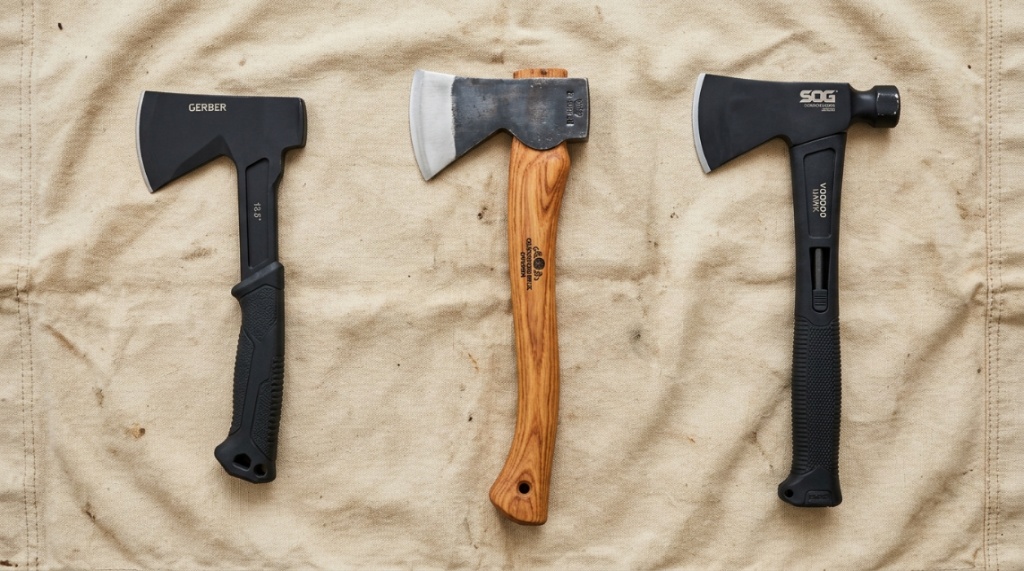
| Handle Material | Pros | Cons | Best For |
|---|---|---|---|
| Hickory Wood | Absorbs shock, replaceable, traditional feel | Can dry out and loosen, heavier | Car camping, bushcraft |
| Fiberglass | Lightweight, weather-resistant, durable | Cannot be field-repaired, vibrates more | Backpacking, wet climates |
| Composite/Rubber Overmold | Excellent grip, shock absorption | Heavier, non-replaceable | Heavy splitting, cold weather |
Hickory remains the classic choice among bushcraft enthusiasts because a broken handle can be carved and replaced in the wilderness. Fiberglass suits hikers who prioritize weight savings and weather resistance. Composite handles with rubber overmolds work best for car campers who split larger rounds and want minimal hand fatigue.
What Is the Ideal Weight and Length for a Camp Axe?
For most campers, a camp axe weighing 1.75 to 2.25 pounds with a 16- to 19-inch handle delivers the best balance of portability and cutting power.
Weight and length work together. A heavier head on a shorter handle concentrates force but limits reach. A lighter head on a longer handle swings faster but may bounce off dense hardwood. The sweet spot depends on your primary task:
- Kindling and feather sticks: 1.5 lbs, 14-inch handle
- General campsite wood processing: 2 lbs, 16-inch handle
- Splitting medium rounds (4–8 inches): 2.25 lbs, 19-inch handle
- Survival/emergency use: Under 2 lbs for packability
A common mistake is buying the heaviest axe possible thinking it splits better. In reality, technique and edge geometry matter more than raw weight. A sharp 2-lb axe with a 25-degree edge bevel outperforms a dull 3-lb axe every time.
How Does Edge Geometry Affect Camp Axe Performance?
A convex grind with a 25- to 30-degree edge angle provides the best combination of durability and cutting efficiency for camp axe tasks.
Edge geometry determines how the blade enters and splits wood fibers. Three common grinds exist:
- Convex grind: Rounded bevel that strengthens the edge while still biting into wood. Ideal for camp axes because it resists chipping on knots and frozen wood.
- Flat/Scandinavian grind: Single bevel straight to the edge. Extremely sharp but fragile — better for carving than splitting.
- Hollow grind: Concave bevel found on some hatchets. Cuts aggressively but chips easily on hardwood.
For a camp axe that handles splitting, limbing, and occasional carving, a convex grind at 25–30 degrees gives you versatility without sacrificing durability. If you plan to do fine bushcraft work, consider a secondary Scandi-ground tool rather than compromising your primary axe edge.
Which Camp Axes Perform Best in Cold Weather and Wet Conditions?
Axes with forged carbon steel heads, fiberglass or rubber-overmold handles, and included leather sheaths perform most reliably in cold, wet environments like Alaska or the Pacific Northwest.
Cold weather introduces specific challenges. Steel becomes more brittle below freezing — lower-quality heads can chip or crack. Wooden handles absorb moisture, swell, then shrink as they dry near a fire, loosening the head. Wet hands slip on smooth wood or bare fiberglass.
Features to prioritize for harsh conditions:
- Forged 1060+ carbon steel (resists cold-weather brittleness)
- Textured grip or rubber overmold (prevents slipping)
- Leather or Kydex sheath (protects edge during transport)
- Lanyard hole (security against drops in snow)
If you camp in extreme environments, check out resources like top-rated camp axes and hatchets tested in Alaska for real-world performance data in sub-zero conditions. Alaskan conditions push tools to their limits, making those reviews particularly valuable for cold-weather gear selection.
What Safety Features Should a Camp Axe Have?
Every camp axe should include a secure sheath, a properly fitted head-to-handle connection, and a grip design that prevents the tool from slipping during wet or fatigued use.
Axe injuries at campsites are more common than most people realize. The U.S. Consumer Product Safety Commission reports thousands of axe and hatchet-related emergency room visits annually. Most injuries result from:
- Loose axe heads flying off during a swing
- Glancing blows when the edge skips off wood
- Improper storage without a sheath
- Swinging while fatigued with poor grip
Before every use, check that the head is firmly seated. For wooden handles, a simple wedge tightening takes seconds. Always swing with a wide stance, knees slightly bent, and aim so that a miss drives the blade into the ground — not your shin. Store the axe sheathed and secured, never loose in a pack or leaning against a tree.
How Do You Maintain a Camp Axe in the Field?
Field maintenance requires three things: a dual-grit sharpening puck, a light coat of oil after each use, and periodic handle inspection for cracks or looseness.
A dull axe is a dangerous axe. It requires more force, bounces unpredictably, and fatigues you faster. Sharpen after every heavy-use session using this process:
- Secure the axe head (clamp or brace against a log)
- Start with the coarse side of a puck stone, following the existing bevel angle
- Make 10–15 circular strokes per side
- Switch to the fine side for 10 strokes per side
- Wipe the edge clean and apply a thin layer of oil (camellia oil or even cooking oil works)
For the handle, check for hairline cracks before each trip. Sand rough spots with 220-grit sandpaper and apply boiled linseed oil to prevent moisture absorption. A well-maintained camp axe lasts decades — many vintage axes from the 1950s still perform beautifully because their owners maintained them properly.
You can read our full breakdown if you like, golf game on how to select the Best Junior Golf Set for Teens for splitting firewood efficiently
Conclusion
Choosing the best camp axe comes down to matching the tool to your specific camping style, environment, and tasks. Prioritize forged high-carbon steel heads, a handle material suited to your climate, and a weight that balances portability with splitting power. Pay attention to edge geometry — a convex grind at 25–30 degrees handles the widest range of camp tasks. Never overlook safety features and field maintenance, because a well-kept axe performs better and lasts longer than any neglected premium tool.
Start by honestly assessing how you camp. Day trips and car camping? A 2.25-lb axe with a hickory handle covers everything. Multi-day backcountry treks? Go lighter with fiberglass. Extreme cold? Prioritize rubber grips and forged steel. Whatever you choose, invest in one quality camp axe rather than cycling through cheap options that fail when you need them most.
What camp axe features matter most to you? Drop your questions below — and share this guide with a fellow camper who is still using a gas station hatchet.
Frequently Asked Questions
What is the best camp axe weight for backpacking?
For backpacking, a camp axe weighing 1.5 to 1.75 pounds with a 14- to 16-inch handle offers the best trade-off between packability and functionality. This weight range handles kindling and light limbing without adding significant pack weight on long treks.
Can I use a camp axe to split large logs?
A camp axe can split rounds up to 8 inches in diameter effectively. For anything larger, you need a splitting maul or full-size axe. Forcing a camp axe through large logs risks damaging the handle and exhausting the user. Stick to campfire-sized wood.
How often should I sharpen my camp axe?
Sharpen your camp axe after every 30–45 minutes of active cutting or whenever the blade stops biting cleanly into wood. A quick 2-minute touch-up with a puck stone maintains performance and prevents the edge from degrading to the point where full re-profiling is needed.
Is a wooden or fiberglass handle better for a camp axe?
Wooden handles (hickory) absorb shock better and can be field-replaced, making them ideal for extended wilderness trips. Fiberglass handles resist weather and weigh less, suiting hikers and wet-climate campers. Neither is universally better — choose based on your camping environment and repair capabilities.
What is the difference between a camp axe and a hatchet?
A camp axe has a longer handle (14–19 inches) and heavier head (1.5–2.5 lbs) than a hatchet (10–13 inches, under 1.5 lbs). Camp axes generate more splitting force and reach, while hatchets prioritize one-handed portability for light tasks like shaping stakes or processing small kindling.
Do I need a sheath for my camp axe?
Absolutely. A sheath protects the sharpened edge from damage during transport and prevents accidental cuts when reaching into a pack or vehicle. Leather sheaths offer durability and breathability, while Kydex sheaths provide waterproof protection and quick access.
Can a camp axe be used for self-defense in the wilderness?
While a camp axe can serve as a last-resort defensive tool against wildlife, it should never be your primary safety plan. Bear spray, proper food storage, and noise-making are far more effective. A camp axe is designed for wood processing — rely on purpose-built safety gear for wildlife encounters.
Sorry, the comment form is closed at this time.