
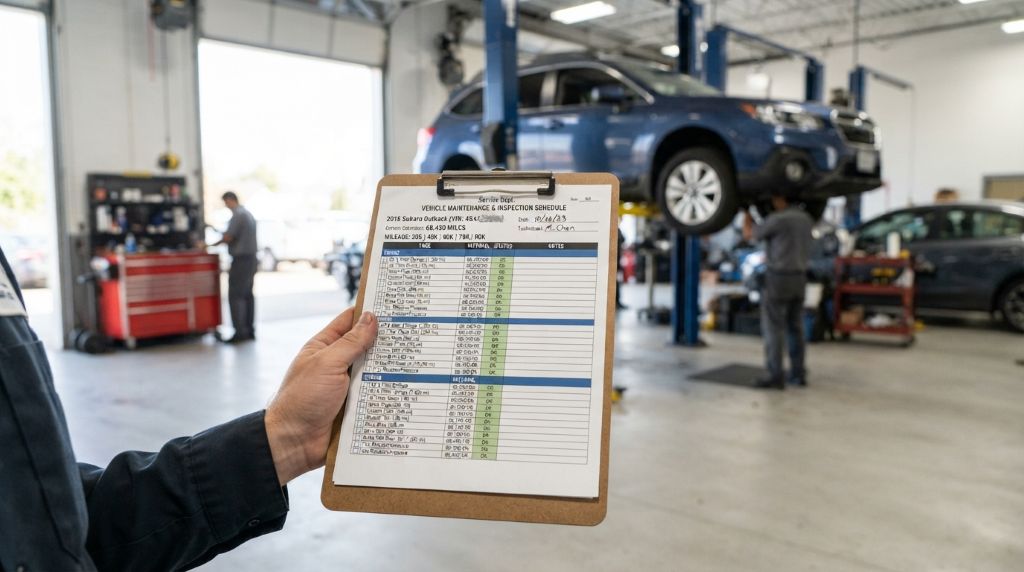
19 Sep Car Maintenance by Mileage: A Complete 5,000- to 100,000-Mile Schedule
Key Takeaways
- A car maintenance by mileage schedule removes all guesswork from ownership.
- Oil changes every 5,000 to 7,500 miles form the backbone of the plan.
- Major services cluster at 30,000, 60,000, and 100,000 miles.
- Skipping a timing belt or fluid service can cost ten times the maintenance price.
- AAA reports one in three drivers cannot cover an unexpected repair without debt.
My first car taught me this lesson with a $2,400 invoice. It was an aging sedan with 92,000 miles, and I loved it dearly. However, I treated maintenance like a suggestion instead of a schedule. Oil changes happened when I remembered. Everything else happened never. One Tuesday morning, the timing belt snapped on my way to work—falling victim to the exact interference engine catastrophe auto experts at Tradecarhub.com constantly warn drivers about. The engine bent its own valves, and the repair quote erased my savings.
The worst part was reading the manual afterward. The timing belt service was listed at 90,000 miles. I was 2,000 miles late, and my laziness cost roughly ten times the service price. Therefore, I now treat mileage intervals like appointments with my doctor. Miss them, and the consequences arrive with interest.
This guide lays out a complete car maintenance by mileage schedule from 5,000 to 100,000 miles. You will learn exactly what each interval needs, why the timing matters, and which services protect you from my $2,400 morning.
Why a Mileage-Based Schedule Matters
Modern cars hide their problems until they cannot anymore. Engines run quietly while fluids age, belts crack, and filters clog. Therefore, waiting for a symptom is the most expensive strategy in car ownership. A mileage schedule flips that approach. You service parts on a timetable, before failure chooses its own timetable.
The financial case is overwhelming. According to AAA, 64 million American drivers, about one in three, cannot pay for an unexpected car repair without going into debt. Meanwhile, most scheduled services cost between $50 and $300. Therefore, small planned spending defends against large unplanned spending.
The safety case matters just as much. Worn brakes, old tires, and tired wipers cause avoidable crashes every year. The NHTSA maintenance and safety page reminds drivers that basic upkeep prevents a large share of roadside breakdowns and hazards.
Finally, there is the resale angle. Buyers and dealers pay more for cars with documented service records. A folder full of receipts is proof of care. Therefore, every scheduled visit adds money back at sale time. The sections below organize everything into five simple tiers.
Every 5,000 to 7,500 Miles: The Foundation Services
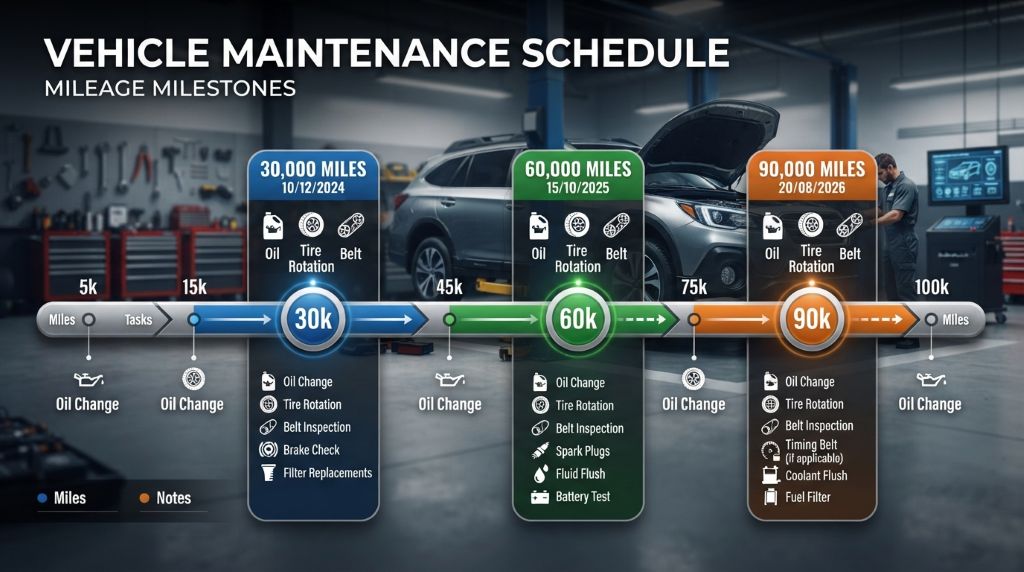
This interval is your ownership rhythm, and it covers the items that wear fastest. Most drivers visit a shop two or three times a year anyway. Therefore, bundle these tasks into every oil visit:
- Engine oil and filter change
- Tire rotation for even tread wear
- Brake, tire, and fluid level inspection
- Windshield wiper check and top-up of washer fluid
- Tread depth and tire pressure check
Oil remains the engine’s lifeblood, and intervals have changed over the years. Older guidance said every 3,000 miles. However, modern synthetic oils and engines comfortably stretch to 5,000 miles or more. Always follow your owner’s manual, because some cars allow 10,000 miles with full synthetic oil. Severe driving, such as short trips, towing, or dusty roads, shortens the interval again.
Tire rotation belongs here because tires and oil share the same rhythm. Rotating every oil change keeps tread depths matched, which protects grip in rain and snow. Additionally, the free inspection during rotation catches brake wear early. Most shops report pad thickness during these visits, therefore small problems surface years before they become large ones.
Make this interval automatic. Set a recurring phone reminder at your average mileage, or book the next visit before leaving the shop. Consequently, the schedule runs itself, and your car never skips a beat.
Every 15,000 to 30,000 Miles: The Mid-Level Checks
These intervals add filtration and inspection depth to the basics. At 15,000 miles, most cars need a cabin air filter and an engine air filter. Both cost little, yet both protect comfort and fuel economy. A clogged engine air filter makes the engine work harder, therefore fuel economy quietly drops.
At 30,000 miles, the list grows to include:
- Fuel system cleaning or fuel filter service on some models
- Transmission fluid inspection, and replacement on many vehicles
- Coolant strength test and top-up
- Battery load test before its third winter
- Chassis lubrication on older trucks
The 30,000-mile mark is your first major checkpoint. Automatic transmission fluid deserves special attention here. Many manuals list a lifetime fluid, however, mechanics widely agree that no fluid lasts forever. Fresh transmission fluid costs $150 to $250. A rebuilt transmission costs $3,000 to $5,000. Therefore, treat this service as cheap insurance.
This is also the right time for a battery test. Most car batteries last three to five years, and a 30,000-mile check often lands near that age. Many parts stores test batteries free. Additionally, ask the shop to inspect belts and hoses, because rubber parts age on calendars as much as on miles. Catching a cracked hose now prevents an overheating tow later.
Every 60,000 Miles: The Big Mid-Life Services
The 60,000-mile service is where many owners drift away, and it is exactly where they should lean in. Cars in this range still have years of life left. Therefore, investing here protects the most valuable half of the vehicle’s lifespan. Typical tasks include:
- Spark plug replacement on many engines
- Coolant flush and refill
- Brake fluid flush
- Transmission fluid service on models that skipped it earlier
- Full suspension, steering, and drivetrain inspection
Spark plugs matter more than drivers expect. Worn plugs force the ignition coils to work harder, and a failing coil causes rough running and misfires. A set of plugs costs $100 to $400. Coils and catalytic converters cost far more. Therefore, fresh plugs protect parts that cost ten times their price.
Fluid flushes dominate this interval, and each one has a reason. Old coolant loses its rust protection, therefore water pumps and radiators corrode from inside. Old brake fluid absorbs moisture, which lowers its boiling point and invites fade. My sedan’s schedule listed every one of these services. I skipped them all, and the neglect showed up as my $2,400 timing belt failure. The lesson sticks years later.
At 100,000 Miles: The Major Milestone
The 100,000-mile mark is a graduation ceremony. Cars that reach it with clean records often run reliably for another 100,000 miles. Therefore, treat this service as an investment, not an expense. The typical checklist includes:
- Timing belt replacement, if your engine uses one
- Full coolant system service, including the thermostat
- New spark plugs and ignition inspection
- Transmission fluid replacement
- Fresh engine and cabin air filters
- Complete brake inspection, including lines and hoses
- Suspension and wheel bearing inspection
The timing belt deserves its own warning. Many engines use a rubber belt that must be replaced between 60,000 and 105,000 miles. The exact interval lives in your manual. When the belt snaps, the engine often destroys its own valves, and repairs reach $2,000 to $4,000. Therefore, if your manual lists this service and you are near the mileage, book it immediately. Some engines use a metal chain instead, which usually lasts longer but still needs oil changes to survive.
This is also the perfect moment for a full inspection with a trusted mechanic. Ask for a written report of what passed and what needs attention. Consequently, you gain a roadmap for the next 50,000 miles, and you catch the small list of items before they grow.
How to Track Your Schedule Without Stress
A perfect schedule fails without a simple tracking system. Use whichever method you will actually follow:
- Keep every receipt in one folder, paper or digital
- Use a free app or spreadsheet to log dates and miles
- Photograph the odometer at each service
- Ask the shop to print recommended next services
- Reread your owner’s manual once a year
Pairing services saves the most mental energy. Oil changes, rotations, and inspections ride together. Bigger services can piggyback on seasonal visits, such as a coolant flush before summer or a battery test before winter. Therefore, two or three planned shop visits a year can cover the entire schedule.
Finally, keep the manual in the glove box and actually read the mileage chart inside it. Manufacturers publish these schedules for your exact engine. Generic advice is a good map, however, your manual is the territory itself. The Car Care Council also offers free guides that mirror the manufacturer intervals, which helps newer owners build the habit.
Final Thoughts
A car maintenance by mileage plan turns ownership from guesswork into routine. Service the basics every 5,000 miles, add filtration by 30,000, refresh fluids and plugs by 60,000, and honor the 100,000-mile milestone. Each tier defends against the failures that create the biggest invoices. Knowing what to do if a repair shop damages your car can also help protect you when routine maintenance goes wrong.
Remember my $2,400 morning. One skipped belt turned a routine service into a savings account drain. Therefore, open your owner’s manual tonight, find your current mileage, and see which tier comes next. Then book the appointment this week.
Which maintenance service has saved you from a huge repair bill? Share your story in the comments below. Additionally, share this schedule with a new driver in your family, because a printed plan is the cheapest gift a car owner can receive.
Frequently Asked Questions
What maintenance should be done every 5,000 miles?
Change the oil and filter, rotate the tires, and inspect brakes, fluids, and tread depth. These basics prevent most major repairs.
What are the major maintenance milestones?
The big checkpoints land at 30,000, 60,000, and 100,000 miles. Fluid flushes, plugs, and timing belts cluster there.
Is 100,000 miles too late to start a schedule?
No. A full inspection and catch-up service at 100,000 miles can still add years of reliable life.
What happens if I skip a timing belt replacement?
The belt can snap without warning. Many engines bend their valves, and repairs often cost $2,000 to $4,000.
Does regular maintenance really save money?
Yes. Most services cost under $300, while a single skipped service can produce a repair above $2,000.
Sorry, the comment form is closed at this time.