

20 Jul Unveiling the Elegance and Lethality of Chinese Soft Weapons
Chinese martial arts boast a rich tapestry of weaponry, encompassing both rigid and flexible forms. While the rigid weapons like swords and spears are more widely known, the soft weapons hold a unique charm and strategic importance. These weapons, often overlooked, were essential tools in ancient warfare and remain a captivating aspect of Chinese martial traditions.
The Nature of Soft Weapons
Soft weapons, also known as flexible weapons, are characterized by their non-rigid construction, often incorporating chains, ropes, or cloth. Unlike their rigid counterparts, they rely on momentum, dexterity, and timing for effectiveness. Their flexibility allows for fluid movements, unpredictable attacks, and intricate maneuvers that can deceive and disarm opponents. Just as one must master balance and technique to climb with rope, proficiency with flexible weapons requires skill and precision.
Prominent Examples of Chinese Soft Weapons
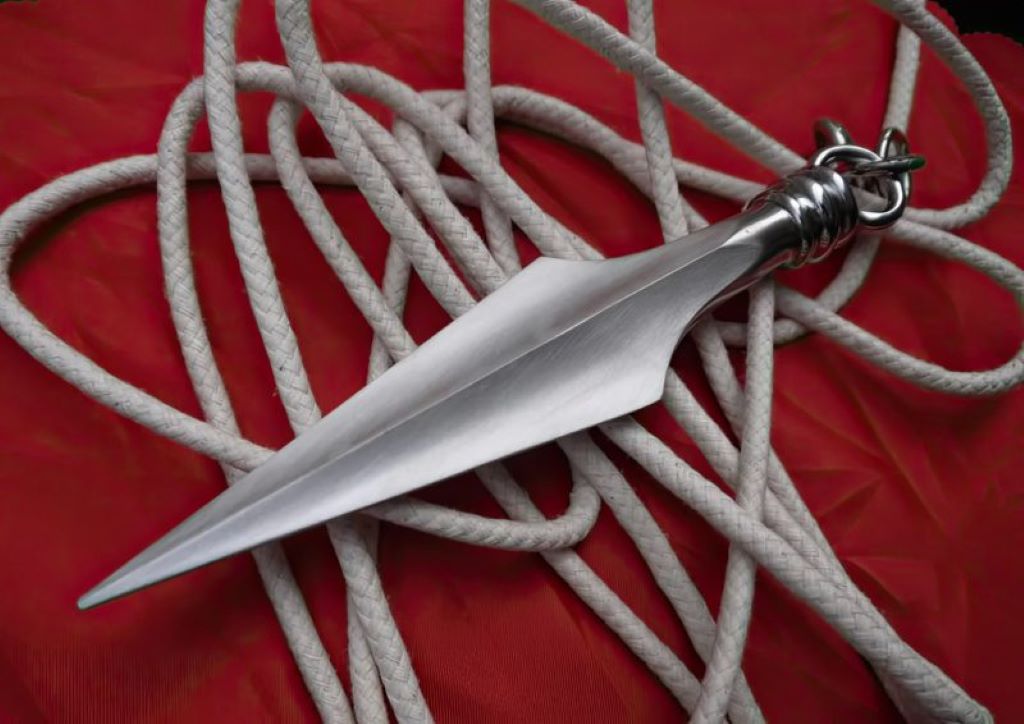
- Rope Dart (Sheng Biao): The rope dart is perhaps the most iconic Chinese soft weapon. It consists of a weighted dart attached to a long rope, typically made of silk or hemp. Wielded with skill, the rope dart becomes an extension of the practitioner’s body, capable of striking, entangling, and disarming adversaries from a distance.
- Meteor Hammer (Liu Xing Chui): The meteor hammer, a weighted ball attached to a chain or rope, is a formidable weapon that combines centrifugal force with pinpoint accuracy. Its spinning motion generates tremendous power, while its flexible connection allows for rapid changes in direction, making it difficult to defend against.
- Three-Sectional Staff (San Jie Gun): The three-sectional staff is a versatile weapon composed of three wooden or metal rods connected by chains or ropes. Its segmented design enables a wide range of techniques, from sweeping strikes to intricate locks and throws. The staff’s adaptability makes it effective in both offensive and defensive scenarios.
- Nine-Section Whip (Jiu Jie Bian): The nine-section whip is a multi-segmented weapon constructed of metal rings linked by small chains or ropes. Its whip-like motion generates considerable force, while its segmented design allows for intricate maneuvers and targeted strikes. The whip’s versatility and reach make it a formidable tool in skilled hands.
- Chain Whip (Tie Lian): The chain whip is a close relative of the nine-section whip, but with fewer segments and a heavier construction. Its primary purpose is to deliver powerful strikes with its weighted ends. The chain whip’s relative simplicity makes it a popular choice for beginners, while its potential for devastating attacks ensures its relevance in advanced practice.
The Role of Soft Weapons in Chinese Martial Arts
Soft weapons hold a significant place in Chinese martial arts, complementing the rigid weapons and expanding the practitioner’s arsenal. Their unique characteristics offer advantages in specific scenarios, such as:
- Reach and Versatility: Soft weapons can extend the practitioner’s reach, allowing them to engage opponents from a safe distance. Their flexible nature enables a wide array of techniques, from long-range strikes to close-quarters grappling.
- Deception and Disruption: The unpredictable movements of soft weapons can confuse and disorient opponents. Their ability to change direction rapidly makes it difficult for adversaries to anticipate and counter attacks.
- Entanglement and Disarmament: Many soft weapons, like the rope dart and meteor hammer, are designed for entanglement and disarmament. They can ensnare limbs, weapons, or even the opponent’s entire body, creating opportunities for follow-up attacks or submission holds.
The Legacy of Soft Weapons
Chinese soft weapons are not merely tools of combat; they are cultural artifacts that embody the ingenuity and artistry of ancient Chinese martial traditions. Their elegant designs, intricate movements, and strategic applications reflect a deep understanding of physics, anatomy, and psychology. The Yifarope review on rope dart weapon illustrates how each element of the weapon’s construction and usage integrates seamlessly into both the practical and symbolic aspects of martial arts practice.
Today, these weapons continue to be practiced and appreciated by martial artists worldwide. They serve as a testament to the enduring legacy of Chinese martial culture, a tradition that values both physical prowess and intellectual acumen. Whether in the training hall or on the performance stage, the grace and power of soft weapons continue to captivate audiences and inspire practitioners.
Sorry, the comment form is closed at this time.