
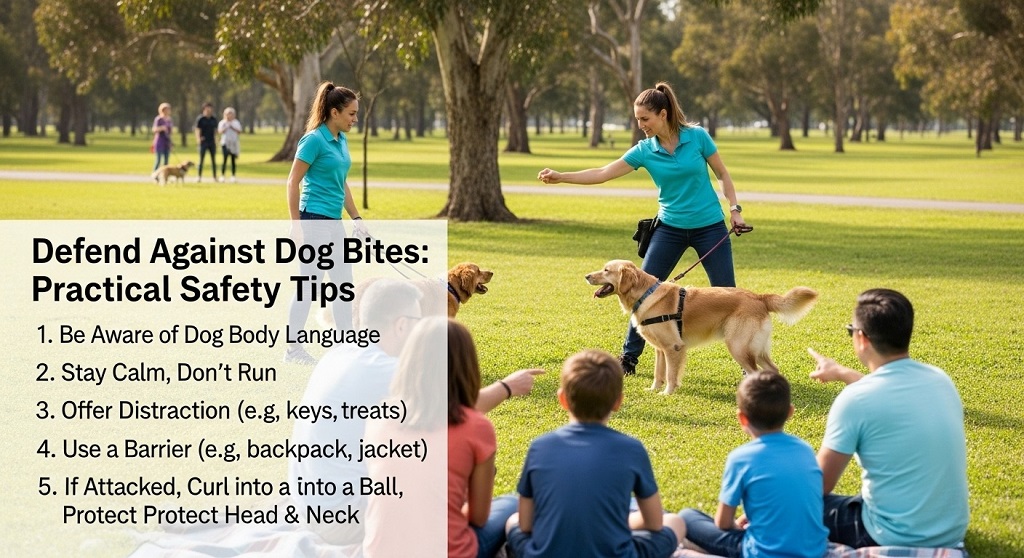
01 Feb How to Defend Against Dog Bites: Practical Safety Tips
How to defend against dog bites means taking practical, proven steps to reduce the risk of being bitten, protect your body during an encounter, and respond correctly if a dog shows aggression. Dog bites are a real public safety issue. According to the World Health Organization, millions of dog bite injuries occur globally every year, with children making up a large percentage of victims. Most bites are preventable when people understand dog behavior and follow simple safety rules.
The problem is not that dogs are “bad.” Most bites happen because humans misread warning signs, panic, or react in ways that trigger a dog’s defensive instincts. The agitation stage—when a dog feels threatened or cornered—is where many attacks begin.
This guide focuses on how to protect yourself from dog attacks using realistic, evidence-backed strategies. You’ll learn what to do before, during, and after a dog encounter. No myths. No panic tactics. Just clear actions that reduce risk and increase safety.
If you walk, jog, cycle, deliver packages, or live around free-roaming dogs, this information is not optional. It’s practical self-protection.
Why do dog bites happen in the first place?
Short answer: Most dog bites happen because the dog feels threatened, stressed, or provoked—often unintentionally.
Studies from veterinary behavior research show that over 70% of dog bites occur during everyday interactions, not extreme situations. Common triggers include:
- Fear or surprise (sudden movements, loud noises)
- Territorial behavior (yards, food, puppies)
- Pain or illness
- Protective instincts
- Past trauma or poor socialization
A case study published by the CDC analyzing emergency room visits found that many victims reported “doing nothing unusual” before being bitten. In reality, actions like staring, reaching out, running, or bending over can signal threat to a dog.
Understanding this matters because how to defend against dog bites starts with prevention, not force.
How can you recognize warning signs before a dog attacks?
Short answer: Dogs almost always warn before they bite. You just need to know what to look for.
Dogs communicate discomfort through body language. Missing these signs is one of the biggest reasons bites happen.
| Warning Sign | What It Means |
|---|---|
| Stiff body posture | Dog is tense and ready to react |
| Growling or snarling | Clear warning to back away |
| Whale eye (white of eyes visible) | High stress or fear |
| Raised hackles | Heightened arousal, not friendliness |
| Tail stiff or tucked | Anxiety or defensive mode |
If you notice two or more of these signs, distance is your best defense. Do not try to calm the dog with touch or eye contact.
How should you behave to prevent dog bites?
Short answer: Calm posture, controlled movement, and neutral behavior reduce bite risk.
Prevention is the strongest layer of defense. Many dog behavior experts agree on these core rules:
- Do not stare directly into a dog’s eyes
- Keep your hands at your sides
- Move slowly and deliberately
- Avoid sudden running or shouting
- Give dogs space, especially when eating or resting
Children are at higher risk because they naturally run, scream, and hug dogs. Teaching kids the “be a tree” rule—stand still, arms down, eyes away—has been shown in school safety programs to reduce bite incidents.
If you’re wondering how to protect yourself from dog attacks, prevention always comes first.
What should you do if a dog approaches aggressively?
Short answer: Stop, stand your ground, and avoid escalating the situation.
An aggressive approach does not always mean a bite is imminent, but your reaction matters.
- Stop moving immediately
- Stand sideways, not face-to-face
- Avoid eye contact
- Use a firm, calm voice: “No” or “Stay”
Do not run. Research from animal control agencies shows that running triggers chase instincts in many dogs. Even friendly dogs may pursue fast movement.
If the dog pauses or slows, slowly back away. Keep your movements controlled.
How can you physically defend yourself if a dog attacks?
Short answer: Protect vital areas and use barriers, not strikes.
Physical defense should be a last resort. But knowing what to do can reduce injury.
- Use an object as a barrier (bag, jacket, umbrella)
- Keep the object between you and the dog’s mouth
- Protect your face, neck, and throat
- If knocked down, curl into a ball and protect your ears
Case reviews of severe dog attacks show that victims who shielded their face and neck suffered fewer life-threatening injuries than those who tried to fight aggressively.
Kicking or punching can escalate the attack unless used strategically to create distance. The goal is escape, not dominance.
What role do tools like pepper spray or sticks play in defense?
Short answer: Tools can help, but only with training and awareness.
Some people carry dog deterrent spray or sticks. These tools have mixed results.
Animal control case studies indicate that:
- Pepper spray works in some cases but may also escalate panic
- Sticks are more effective as barriers than weapons
- Improper use can increase injury risk
If you choose a tool, practice using it calmly. Panic reduces effectiveness.
How should cyclists and runners defend against dog bites?

Short answer: Slow down, dismount if needed, and create distance.
Cyclists and runners face unique risks. Movement triggers chase behavior.
- Slow down as soon as you see a dog
- Put your bike between you and the dog
- Do not kick while moving
- Use your voice calmly
A field study from urban delivery workers found that those who dismounted and used their bike as a shield experienced fewer bites than those who tried to outrun dogs.
What should you do immediately after a dog bite?
Short answer: Clean the wound and seek medical care fast.
Even minor bites can cause serious infections.
- Wash the wound with soap and running water for 15 minutes
- Apply antiseptic if available
- Seek medical care immediately
- Report the bite to local authorities
According to WHO data, rabies remains a risk in many regions. Do not delay treatment.
How can communities reduce dog bite incidents?
Short answer: Education, responsible ownership, and awareness reduce risk.
Community-level studies show that bite incidents drop when people understand dog behavior and when dogs are properly trained and vaccinated.
Personal defense is important, but prevention at scale saves more lives.
Conclusion: Why learning dog bite defense matters
Dog bites are not random events. They follow patterns. When people understand those patterns, injuries drop. Knowing how to defend against dog bites is about awareness, calm behavior, and smart response—not fear.
You don’t need to overpower a dog. You need to avoid triggering it, read warning signs early, and protect yourself if things escalate. These steps are backed by real-world data, not guesswork.
Call to Action: Share this guide with family members, runners, parents, and coworkers. Awareness spreads safety. If you want more practical safety guides, bookmark this page and stay informed.
Frequently Asked Questions
How do you defend against a dog bite without hurting the dog?
Stay calm, avoid eye contact, use barriers like bags or jackets, and slowly back away. Focus on protection, not force.
Is running away from a dog a good idea?
No. Running often triggers chase behavior. Standing still or moving slowly reduces risk.
What is the safest body position during a dog attack?
Protect your face and neck. If knocked down, curl into a ball and cover your ears.
Do friendly dogs bite?
Yes. Even friendly dogs can bite when scared, injured, or overstimulated.
How can parents teach children to avoid dog bites?
Teach children not to run, scream, or hug unfamiliar dogs. The “be a tree” method is effective.
Does pepper spray work against dogs?
Sometimes. Effectiveness varies. Improper use can increase risk.
When should you see a doctor after a dog bite?
Always. Even small bites can cause infection or rabies exposure.
Related Topics: How to Date Old-Fashioned Yellow Cloth by Weave Pattern
Related Topics: Secure Baby Monitors Without WiFi: A Parent’s Guide
Sorry, the comment form is closed at this time.