
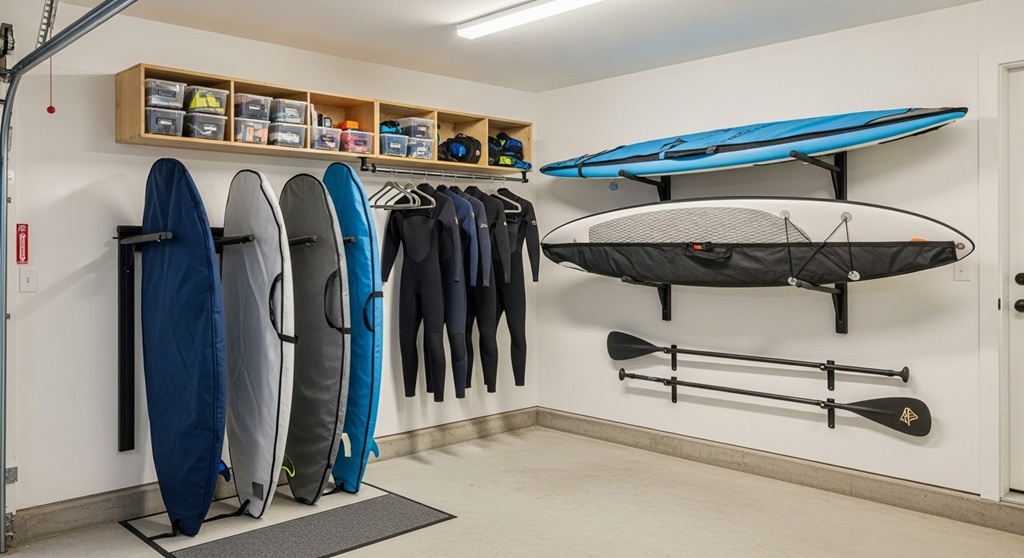
12 Mar How to Store Surf Equipment Safely at Home
Surf gear may look simple, but storing it the wrong way can shorten its lifespan quickly. Surfboards warp, fins get lost, and wax melts if equipment sits in poor conditions. Many surfers invest hundreds or even thousands of dollars in boards, wetsuits, and accessories, yet overlook proper storage at home.
Good storage is not only about saving space. It protects expensive equipment, prevents damage, and keeps gear ready for the next session. According to industry estimates from surf equipment retailers, poorly stored surfboards are among the most common reasons for premature board damage. Heat exposure alone can weaken foam cores and delaminate fiberglass layers.
This guide explains how to store surf equipment safely at home using practical systems. You will learn proven surf gear storage ideas, how to organize surfboard accessories storage, and how to prevent common damage issues like warping, moisture buildup, and misplaced gear.
If you surf regularly or simply want to protect your investment, these strategies will help you build an efficient and safe storage setup.
What Is the Best Way to Store Surf Equipment at Home?
The best way to store surf equipment is in a cool, dry space using wall racks, storage bins, and organized compartments for accessories.
Proper storage protects equipment from three major risks: heat, moisture, and pressure damage. Surfboards and accessories are made from materials such as polyurethane foam, epoxy resin, fiberglass, rubber, and neoprene. These materials respond poorly to extreme conditions.
A good storage system typically includes:
- Wall-mounted surfboard racks
- Dedicated bins for fins and wax
- Drying space for wetsuits
- Protective board bags
- Temperature-controlled storage areas
Many surfers convert part of their garage or spare room into a surf storage zone. This reduces clutter and keeps all gear in one location.
Below is a quick overview of safe storage conditions:
| Factor | Recommended Condition | Reason |
|---|---|---|
| Temperature | 15–25°C | Prevents foam expansion and delamination |
| Humidity | Low to moderate | Prevents mold on wetsuits and gear |
| Sunlight | Avoid direct exposure | UV can weaken fiberglass and resin |
| Pressure | No heavy stacking | Prevents dents and board warping |
Why Is Proper Surfboard Storage Important?
Proper surfboard storage prevents structural damage, extends equipment lifespan, and reduces repair costs.
Surfboards are lightweight but fragile. Most boards are made using foam cores wrapped in fiberglass and resin. Heat or pressure can weaken these layers.
Common problems caused by poor storage include:
- Board warping due to uneven pressure
- Delamination caused by heat exposure
- Pressure dents from stacking boards
- Fins and accessories getting lost
- Mold buildup in wetsuits
A small storage mistake can lead to expensive repairs.
For example, a surf shop repair case study in California reported that approximately 35% of board repairs were caused by storage-related damage. The most frequent issue was heat damage from boards left in garages without ventilation.
Good storage protects the equipment and reduces unnecessary expenses.
Where Should You Store Surfboards at Home?
The best place to store surfboards at home is a shaded indoor area such as a garage wall, spare room, or dedicated storage rack.
Ideal locations include:
- Garage walls with mounted racks
- Indoor storage rooms
- Closet space with padded racks
- Under stair storage areas
Avoid storing surfboards in the following locations:
- Direct sunlight areas
- Hot attics
- Inside cars for long periods
- Damp basements
Even strong epoxy boards can suffer structural stress when exposed to heat.
If you live in a warm coastal region, consider ventilated racks or insulated board bags to reduce heat exposure.
What Are the Best Surf Gear Storage Ideas for Small Spaces?
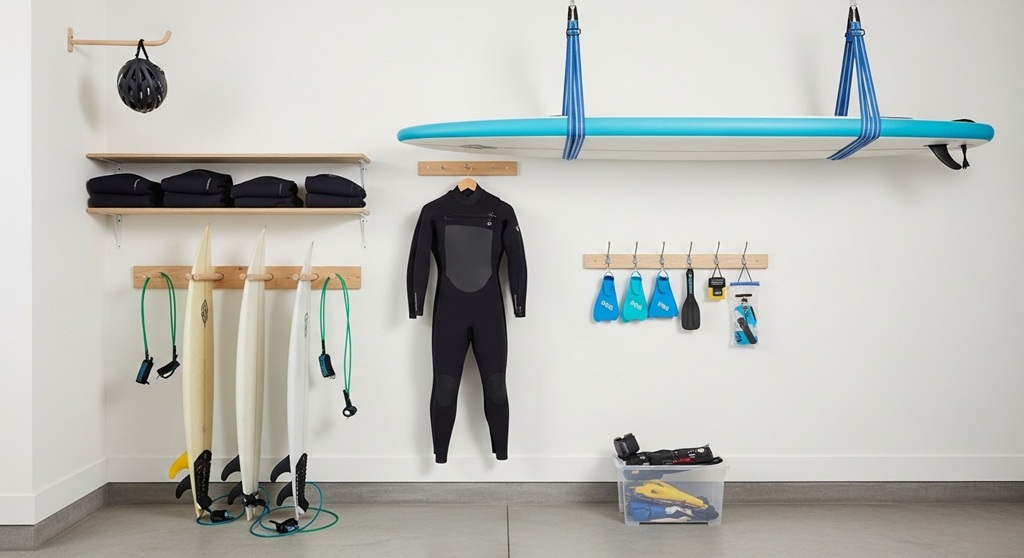
Vertical racks, wall hooks, and modular storage systems are the most efficient surf gear storage ideas for small homes.
Not everyone has a large garage. Small apartments or compact homes require smarter solutions.
1. Vertical Surfboard Storage
Vertical racks store boards upright against a wall. This saves floor space and allows easy access.
Benefits include:
- Minimal floor usage
- Quick board access
- Cleaner organization
2. Ceiling Storage Racks
Ceiling-mounted racks are popular in garages. Boards hang overhead, leaving floor space free.
These systems are useful when storing multiple boards.
3. Multi-Gear Storage Stations
A single storage station can organize:
- Surfboards
- Leashes
- Fins
- Wax
- Wetsuits
This system works well for regular surfers with large equipment collections.
4. Foldable Racks
Foldable racks attach to walls and collapse when not in use. They are ideal for limited spaces.
How Should You Organize Surfboard Accessories Storage?
Surfboard accessories storage works best when small items are separated into labeled containers or drawers.
Accessories are easy to lose. A simple organization system prevents wasted time searching for gear.
Important accessories include:
- Fins
- Fin keys
- Leashes
- Wax and wax combs
- Ding repair kits
- Surfboard bags
Accessory Storage System Example
| Accessory | Storage Method |
|---|---|
| Fins | Small labeled boxes |
| Wax | Plastic containers |
| Leashes | Wall hooks |
| Repair kits | Tool drawer |
| Fin keys | Magnetic holder |
Using transparent containers helps identify items quickly.
How Do You Store Wetsuits and Surf Clothing Properly?
Wetsuits should be rinsed, dried, and hung on wide hangers to prevent stretching and odor buildup.
Neoprene material can degrade if stored incorrectly.
Best practices include:
- Rinse wetsuits with fresh water after each use
- Allow suits to air dry completely
- Use thick wetsuit hangers
- Store in ventilated areas
Never store wetsuits when wet.
Moisture trapped inside neoprene can cause mold growth and unpleasant odors.
How Can You Protect Surfboards From Damage During Storage?
Protect surfboards by using padded racks, board bags, and avoiding pressure from other equipment.
Surfboards often get damaged during storage rather than during surfing.
Follow these protection methods:
- Use foam-padded wall racks
- Store boards horizontally with support points
- Use board bags for long-term storage
- Keep heavy objects away from boards
Shortboards and longboards require slightly different support spacing to prevent bending.
What Mistakes Should You Avoid When Storing Surf Equipment?
The most common storage mistakes include heat exposure, stacking boards, and poor organization of accessories.
These errors can damage equipment quickly.
- Leaving boards in hot garages
- Stacking multiple boards without padding
- Storing wet wetsuits in closed spaces
- Keeping fins loose without containers
- Ignoring ventilation
A simple storage routine can prevent most of these problems.
Conclusion: How Can You Keep Surf Equipment Organized Long-Term?
Storing surf equipment safely at home is not complicated, but it requires a clear system. The key is controlling temperature, preventing pressure damage, and organizing accessories properly.
Simple solutions like wall racks, labeled containers, and wetsuit hangers make a big difference. These methods protect boards from heat damage, keep accessories easy to find, and extend the life of expensive gear.
Surfers who follow structured storage systems often spend less on repairs and replacements. More importantly, organized gear means less time searching and more time in the water.
If you surf regularly, consider building a dedicated surf storage setup in your home or garage. Start with basic racks and accessory bins, then expand as your equipment collection grows.
Take action today by setting up a simple surf gear storage system. Your boards, accessories, and wetsuits will last longer—and your next surf session will start with everything ready to go.
Frequently Asked Questions
How should surfboards be stored when not in use?
Surfboards should be stored on padded racks in a cool, shaded area. Avoid direct sunlight, excessive heat, and stacking boards on top of each other.
Can you store surfboards vertically?
Yes. Vertical storage is safe if boards are supported properly and protected from pressure points. Many surfers use vertical wall racks in garages or small rooms.
Should surfboards be stored in board bags?
Board bags provide protection from dust, sunlight, and accidental impacts. They are especially useful for long-term storage.
What temperature is safe for surfboard storage?
Most surfboards should be stored between 15°C and 25°C. High temperatures can cause foam expansion and resin separation.
How do you organize surf accessories?
Use labeled containers, wall hooks, and storage drawers. Separate small items such as fins, wax, and repair kits for easy access.
Can wetsuits be folded for storage?
It is better to hang wetsuits on wide hangers. Folding can create creases that weaken neoprene over time.
How do surfers store multiple boards?
Multiple boards are typically stored on tiered wall racks or ceiling racks. These systems support boards evenly and prevent pressure damage.
Read More Also: How to Choose the Best Nano Reef Tank Starter Kit
Find out: How to Rig the Perfect Surf Fishing Setup for Pompano
Sorry, the comment form is closed at this time.