

11 Jun How to Change Comfortably at the Beach Without a Changing Room
Every beachgoer has lived this moment: you’re soaking wet, freezing, and doing the awkward towel dance behind a car door, praying the towel doesn’t drop while strangers walk past. There’s a better way, and surfers figured it out years ago. A beach changing robe turns the most undignified part of any beach or surf day into a five-second non-event — you slip it on, change underneath in complete privacy, and walk away warm and dry. Changing comfortably at the beach without a changing room isn’t about contortionist towel skills. It’s about having the right gear that provides full coverage, lets you move freely, and keeps you warm during the vulnerable post-swim chill. This changing robe guide covers exactly how to change in public spaces with dignity, warmth, and zero exposure anxiety.
Beach and surf changing has become a genuine gear category because the problem is universal—over 80% of regular beachgoers report the towel-wrap method as a frequent source of stress and occasional embarrassment, according to outdoor recreation surveys. The solution evolved from surfers who needed to peel off wetsuits in parking lots without flashing the neighborhood. Their changing robes and ponchos have crossed over to swimmers, triathletes, open-water enthusiasts, and families who simply want to change a kid out of a wet swimsuit without drama. Here’s the complete guide to changing comfortably anywhere, using the right beach changing robe and proven techniques.
What Is the Best Way to Change at the Beach Without a Changing Room?
The best way to change at the beach is using a hooded changing robe or surf poncho that covers you from shoulders to knees—providing complete privacy while you remove wet clothing and put on dry clothes underneath in seconds.
Changing methods ranked by effectiveness:
- Changing robe/poncho (best): Full coverage, hands-free privacy, warmth included. Slip it on, change underneath, done. No risk of exposure. $30–$80.
- Oversized towel poncho (good): Similar concept, lighter weight. Good for warm climates where warmth isn’t a concern. $25–$50.
- Two-towel method (adequate): One towel wrapped around waist, change underneath while holding it. Requires skill and luck. Free but stressful.
- Car door method (risky): Change behind an open car door. Exposed from multiple angles. Depends on parking position. Not recommended.
- Towel-clip method (adequate): Towel secured with clips or a towel with velcro closure. Better than holding but limited mobility. $15–$30.
How Does a Changing Robe Work?
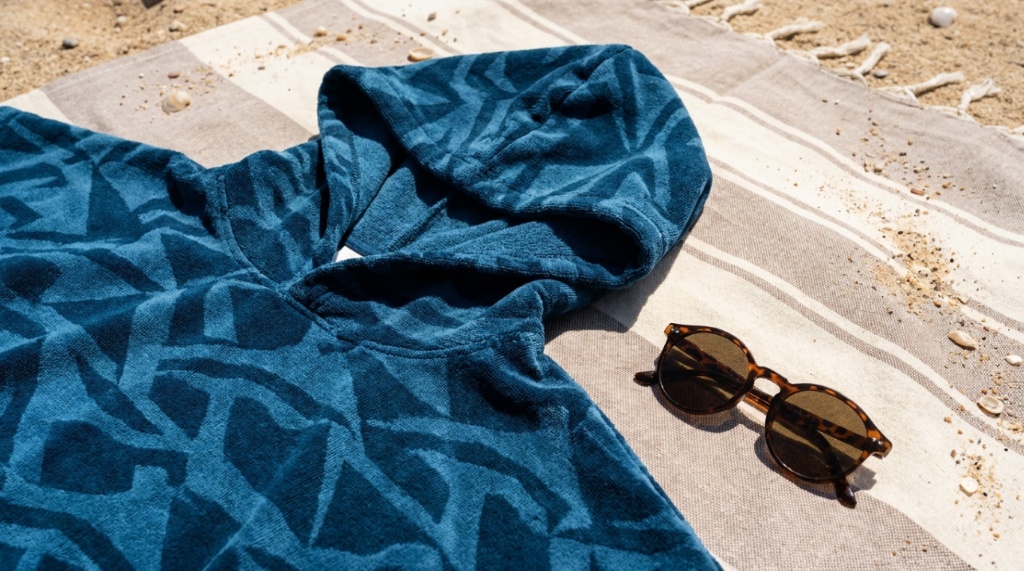
A changing robe is a large, loose poncho-style garment you pull over your head. It drapes from your shoulders past your knees, creating a private enclosed space where you can remove wet clothing and dress in dry clothes without exposing yourself.
The process step-by-step:
- Step 1: Pull the changing robe over your head while still in your wet swimwear or wetsuit.
- Step 2: With the robe providing full coverage, remove your wet clothing underneath. The loose fit gives you room to maneuver.
- Step 3: Use the robe’s interior space to dry off (many robes have towel-material interiors).
- Step 4: Put on dry clothes underneath the robe — underwear, shorts, whatever you need.
- Step 5: Pull the robe off over your head, fully dressed. Total time: 1–2 minutes.
The key advantage: your hands are free during the entire process because the robe stays up on its own. No holding, no slipping, no awkward balancing. You can change standing up anywhere — parking lot, beach, trailhead, poolside.

What Should You Look for in a Beach Changing Robe?
Look for adequate length (past the knees), a wide neck opening for easy on/off, absorbent or quick-dry interior material, and sufficient width to move your arms freely while changing underneath.
Essential features:
| Feature | Why It Matters | What to Look For |
|---|---|---|
| Length | Privacy coverage | Falls below knees (mid-thigh minimum) |
| Width | Room to change | Loose enough to move arms freely |
| Neck opening | Easy on/off | Wide enough to pull over head easily |
| Interior material | Drying + warmth | Towel terry (warmth) or microfiber (quick-dry) |
| Hood | Warmth + hair drying | Lined hood for cold conditions |
| Sleeves | Mobility + warmth | Sleeves for cold climates, sleeveless for warm |
| Front pocket | Hand warming + storage | Kangaroo pocket for keys/phone |
What Materials Are Best for Changing Robes?
Towelling terry cloth provides the most warmth and absorbency for cold climates, while microfiber and waffle-weave fabrics offer quick-drying lightweight options for warm-weather beach days.
Material comparison:
- Cotton terry towelling: Maximum absorbency and warmth. Dries you while you change. Heavier and slower to dry itself. Best for cold-water surfing and cool climates. The classic surf changing robe material.
- Microfiber: Lightweight, packs small, dries quickly. Less warm than terry. Best for travel and warm climates where you want quick-dry convenience.
- Waffle weave: Lightweight with good absorbency. Quick-drying. Compact for packing. Good middle-ground option.
- Sherpa/fleece-lined: Maximum warmth for cold conditions. Not absorbent (won’t dry you) but extremely cozy. Best for winter surfers and cold-water sports.
- Technical waterproof shell + lining: Premium robes with waterproof exterior and warm lining. Block wind and rain while you change. Best for serious cold-water athletes. $80–$150.
How Do You Change at the Beach Without Any Special Gear?
If you don’t have a changing robe, the two-towel method works: wrap one large towel securely around your waist (tuck it tightly), then change your lower half underneath while a second towel or your shirt covers your upper body.
No-gear changing techniques:
- The secure tuck method: Use the largest towel you have. Wrap it around your waist and tuck the corner firmly into the top edge — like a sarong. Tuck deeply so it holds without hands. Change underneath.
- The dress-over method: Put dry clothes on OVER your wet swimwear first, then remove the wet swimwear underneath your dry clothes. Works for swimsuits, harder for wetsuits.
- The oversized t-shirt method: A large t-shirt or kaftan provides upper coverage while you change your lower half. Combine with a waist towel.
- The buddy blanket method: A friend holds a large towel or blanket as a screen while you change behind it. Works if you have a willing companion.
The limitation of no-gear methods: they require skill, luck, and tolerance for some stress. They also don’t provide warmth during the cold post-swim period. A $30–$40 changing robe eliminates all of these problems permanently.
How Do You Get Out of a Wet Wetsuit at the Beach?
Peel a wetsuit down to your waist first, then use a changing robe for privacy as you remove it completely and change. Wetsuits are harder to remove than swimwear, making a changing robe especially valuable for surfers.
Wetsuit removal process:
- Step 1: While still decent, unzip and peel the wetsuit off your upper body down to your waist.
- Step 2: Put on your changing robe over your head and shoulders.
- Step 3: Under the robe, peel the wetsuit down your legs and step out. Wetsuits stick to wet skin — work it down gradually.
- Step 4: Dry off and dress underneath the robe.
- Step 5: Stand on a wetsuit changing mat or the inside-out robe to keep your feet clean while changing.
Pro tip for wetsuits: a changing mat or even the robe laid on the ground keeps sand off your feet and wetsuit. Sand inside a wetsuit causes chafing and degrades the neoprene over time. Many surf changing setups include a waterproof base bag that doubles as a wetsuit-changing mat.
What Are the Best Changing Robe Options for Different Budgets?
Budget options ($25–$40) provide basic poncho coverage, mid-range robes ($40–$80) add warmth and quality materials, and premium robes ($80–$150) offer waterproof shells with insulated linings for serious cold-water use.
Options by budget:
- Budget ($25–$40): Basic terry or microfiber poncho. Full coverage, decent absorbency. Perfect for casual beachgoers and warm climates. Great value for occasional use.
- Mid-range ($40–$80): Quality towelling with hood, sleeves, and front pocket. Warmer, more durable, better coverage. Best for regular surfers and swimmers. The sweet spot for most users.
- Premium ($80–$150): Waterproof/windproof outer shell with sherpa or fleece lining. Blocks wind and rain while changing. Built for cold-water surfers, triathletes, and winter swimmers. Worth it for serious year-round water athletes.
For most beachgoers and recreational surfers, a mid-range $40–$60 changing robe delivers the best balance of warmth, coverage, durability, and value. Reserve premium waterproof robes for genuine cold-water conditions where wind protection matters.
How Do You Care for a Changing Robe to Make It Last?
Rinse sand and salt after each use, machine wash on cold, and air dry to preserve the material’s absorbency and prevent the breakdown that hot drying causes.
Care guidelines:
- Rinse first: Shake out sand and rinse salt before washing. Salt and sand degrade fabric over time.
- Cold machine wash: Most changing robes are machine washable on cold. Use mild detergent.
- Air dry: Hang to dry rather than machine drying. Heat damages elastic, reduces absorbency, and can shrink terry materials.
- Avoid fabric softener: It coats absorbent fibers and reduces their drying ability. Skip it for towelling robes.
- Store dry: Never store a damp robe — it develops mildew and odor. Ensure it’s fully dry before storing.
With basic care, a quality changing robe lasts 3–5 years of regular use. The towelling may become softer and slightly less absorbent over time, but coverage and warmth function remain intact for years.
Conclusion
Changing comfortably at the beach without a changing room is a solved problem — the solution is a changing robe or surf poncho that provides full-coverage privacy while keeping you warm during the vulnerable post-swim chill. The awkward towel dance, the car-door contortions, and the exposure anxiety all disappear the moment you slip on a robe and change underneath in seconds. It’s one of those small gear upgrades that disproportionately improves your entire beach or surf experience.
For most people, a mid-range $40–$60 towelling changing robe with a hood and front pocket is the ideal choice — warm, absorbent, durable, and dignified. Cold-water surfers should invest in premium waterproof-shell robes for wind protection. And if you’re caught without gear, the secure-tuck two-towel method gets you through in a pinch. Whatever your situation, you never need to do the awkward towel dance again.
Where do you usually change after swimming or surfing? Share your current method in the comments — I’ll recommend the specific changing robe that fits your climate and activity. Planning your next seaside getaway requires a bit of strategy, from packing the right gear to knowing how to change comfortably at the beach without a changing room. If you are heading to the East Coast, managing your stay is just as important as mastering your beach setups. Many visitors don’t realize how the local market operates, but learning how Realtors Get Paid for NJ Beach Rentals: Explained Simply can help you find the best properties and secure a seamless summer rental experience.
Frequently Asked Questions
What is a beach changing robe?
A beach changing robe is a large, loose poncho-style garment you pull over your head. It covers you from shoulders to past your knees, creating private enclosed space to remove wet clothing and put on dry clothes underneath — without any risk of exposure. Many include hoods and absorbent towelling interiors.
How do you change at the beach without flashing everyone?
Use a changing robe or surf poncho for complete hands-free privacy. Without one, use the secure-tuck towel method: wrap a large towel tightly around your waist, tuck it firmly, and change underneath. A changing robe is far more reliable and also keeps you warm.
Are changing robes worth it?
Yes — for anyone who swims, surfs, or visits the beach regularly. At $30–$80, a changing robe eliminates the stress and occasional embarrassment of public changing while providing warmth during the cold post-swim period. It’s used every single session, making it one of the highest-value beach gear purchases.
What’s the difference between a changing robe and a regular towel?
A changing robe is designed to stay up on its own (pulled over your head), freeing your hands to change underneath. A regular towel must be held or tucked, limiting mobility and risking slippage. Changing robes also provide more coverage and often include hoods and warming linings.
Can you use a changing robe in cold weather?
Yes — changing robes excel in cold weather. Towelling robes provide warmth and dry you simultaneously. For very cold conditions, premium robes with waterproof shells and fleece or sherpa linings block wind while keeping you warm. Cold-water surfers consider them essential winter gear.
How big should a changing robe be?
A changing robe should fall below your knees for adequate privacy and be loose enough to move your arms freely while changing underneath. Most are one-size-fits-most with generous dimensions. If between sizes, choose larger — more room makes changing easier and provides better coverage.
What material is best for a beach changing robe?
Cotton terry towelling is best for warmth and absorbency (cold climates and cold-water surfing). Microfiber is best for quick-drying and travel (warm climates). For extreme cold, choose a waterproof shell with fleece lining. Match the material to your climate and activity.
Sorry, the comment form is closed at this time.