
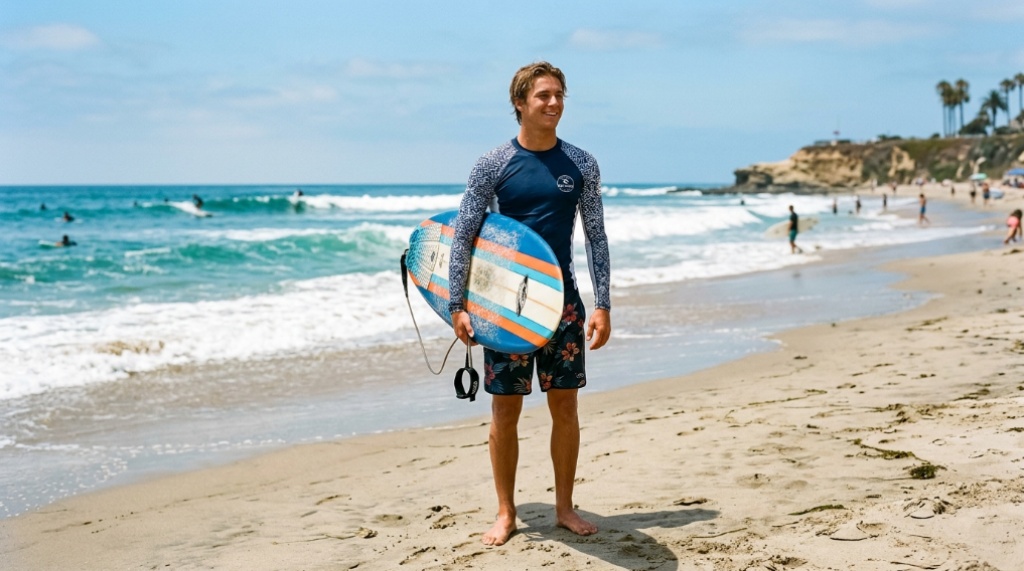
17 Sep How to Choose the Right Clothing for a Day of Surfing
You paddle out at sunrise, the water is glassy, and everything feels right—until the wind picks up, the sun climbs, and your skin starts to sting from a combination of salt, UV rays, and chafing. Hours later, you’re cut short not by fatigue but by discomfort, and the culprit is usually what you wore. Surf apparel isn’t complicated, but the details matter far more than most people expect. Choosing well means understanding water temperature, sun exposure, session length, and how different fabrics behave when wet. Starting with a quality base layer like a rash guard makes a measurable difference, and resources such as TheSurfingVillage help surfers compare real options before buying. This guide walks through what to prioritize so your clothing supports the session instead of ending it early.
Quick Answer
Choose surfing clothing based on water temperature, air temperature, session length, and sun exposure. For warm water (above 24°C / 75°F), wear boardshorts or a swimsuit with a long-sleeve rash guard for sun and rash protection. For cooler water, add a wetsuit or wetsuit top rated for the actual water temperature, not the air temperature. Prioritize flatlock or glued seams, four-way stretch fabric, and a secure fit that won’t ride up when paddling. Avoid cotton entirely, and check the forecast for wind, which changes how cold you’ll actually feel.
Key Takeaways
- Water temperature, not air temperature, should drive your core clothing decision—a warm sunny day with cold water still requires a wetsuit.
- Long-sleeve rash guards protect against UV, board rash, and chafing, making them useful far beyond just cold conditions.
- Cotton is the wrong fabric for surfing; it holds water, loses insulation when wet, and increases chafing.
- Wind and session length change your layering needs more than most beginners expect.
- Fit matters as much as material: loose clothing causes drag and rash, while overly tight gear restricts paddling.
Start With Water Temperature, Not Air Temperature
The single most common mistake is dressing for the weather on the beach rather than the water you’ll be sitting in. A 28°C (82°F) sunny day paired with 15°C (59°F) water feels pleasant from the sand and genuinely cold after thirty minutes of sitting in it. Water conducts heat away from your body roughly 25 times faster than air, which is why immersion feels different from a cold breeze.
Use water temperature as your primary filter, then adjust for air temperature, wind, and how long you plan to stay out. A quick decision framework:
| Water Temperature | Typical Setup | Notes |
|---|---|---|
| 26°C+ (79°F+) | Boardshorts or swimsuit, optional rash guard | Rash guard still recommended for sun protection |
| 22–25°C (72–78°F) | Boardshorts plus long-sleeve rash guard or 1mm top | Wind and session length determine if you need more |
| 18–21°C (65–71°F) | 2mm spring suit or wetsuit top with boardshorts | Full spring suit if you run cold or plan a long session |
| 14–17°C (58–64°F) | 3/2mm full wetsuit | Add booties in the lower part of this range |
| Below 14°C (58°F) | 4/3mm or thicker full wetsuit with accessories | Hood, booties, and gloves become relevant |
These bands are general guidance. Individual cold tolerance varies widely, and a surfer who runs warm may be comfortable in less insulation than someone who runs cold at the same temperature.
Rash Guards and Swim Shirts: More Than Just Sun Protection
A long-sleeve rash guard is the most versatile piece of surf clothing you can own. It works as a standalone layer in warm water, a base layer under a wetsuit in cold water, and a barrier against board rash during long paddle sessions. The name comes from its original purpose—preventing the abrasion and irritation caused by skin rubbing against a waxed surfboard.
What to look for in a rash guard
- Fabric: Look for a polyester-spandex or nylon-spandex blend. These dry quickly, hold shape when wet, and provide four-way stretch that doesn’t restrict shoulder rotation.
- Seams: Flatlock seams lie flat against the skin and reduce chafing. Overlocked seams can rub during long paddles.
- UPF rating: Most dedicated swim shirts offer UPF 50, which blocks the vast majority of UV radiation. This matters because UV exposure is stronger on the water due to reflection.
- Fit: Snug but not compressive. It should move with you and stay in place when you paddle. If it bunches at the shoulders, it will chafe.
- Length: Long sleeves protect forearms and reduce wax irritation on the arms. Short sleeves are cooler but leave more skin exposed.
For warm-water surfers who want sun and rash protection without a full wetsuit, a quality long-sleeve swim shirt is often the single best investment. It’s useful for surfing, swimming, snorkeling, and any long sun exposure on the water, For extreme ocean adventures, read our guide on big wave surfing what it takes to ride the giants.
Rash guard vs. wetsuit top
These are often confused. A rash guard is a thin, non-insulating layer designed for protection. A wetsuit top contains neoprene and traps a thin layer of water against your skin to provide warmth. If you’re cold, a rash guard alone won’t fix it—you need neoprene. If you’re warm and need protection, a wetsuit top will overheat you.
Wetsuits: Matching Thickness to Conditions
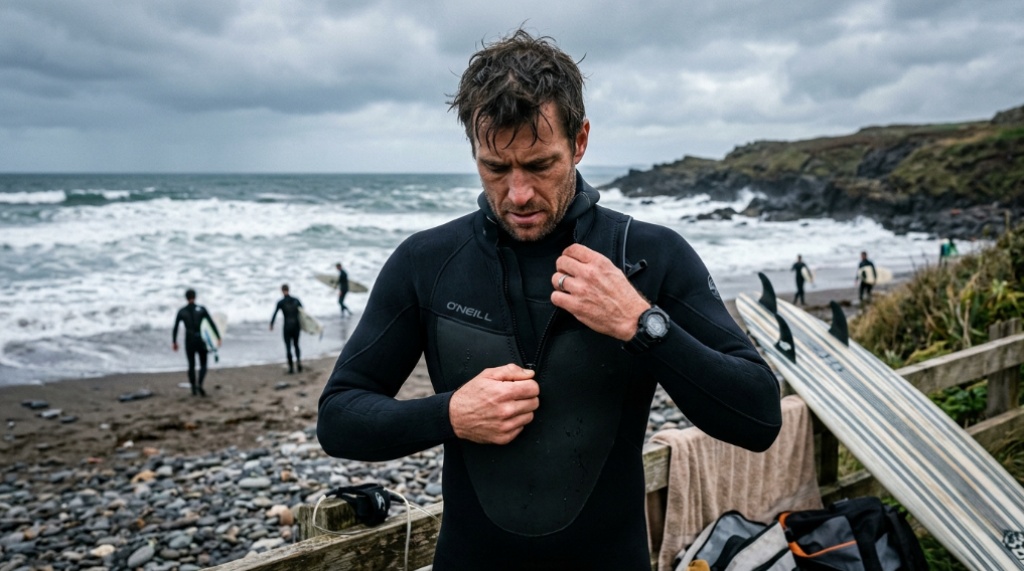
Wetsuit thickness is expressed as two numbers, such as 3/2mm. The first number is the thickness at the torso and legs, where warmth matters most. The second number is the thickness at the arms and shoulders, where flexibility matters most. A 3/2mm suit is a common all-rounder for cool-but-not-freezing water.
Beyond thickness, a few construction details change how a suit performs:
- Seam construction: Flatlock seams are durable but allow water to seep through. Glued and blind-stitched seams limit flushing and are warmer. Taped seams are the warmest and most expensive.
- Entry system: Back-zip suits are cheaper and easier to get into but flush more water. Chest-zip and zipless designs seal better and are warmer, though they’re harder to put on.
- Neoprene type: Standard neoprene is durable and affordable. Limestone-based neoprene is generally lighter and more flexible. Some brands use stretchier panels at the shoulders and arms for paddle comfort.
A well-fitting wetsuit matters more than an expensive one. If it gapes at the neck, lower back, or wrists, cold water flushes through and defeats the insulation. If it’s too tight, it restricts breathing and paddling. Fit is the priority; features come second.
Boardshorts, Swim Trunks, and Swimwear
In warm water, boardshorts or a swimsuit are often all you need on your lower half. The key considerations are quick-drying fabric, a secure closure, and enough length or coverage to prevent chafing against the board.
Look for:
- Four-way stretch fabric with a polyester or nylon base—these dry fast and don’t hold water weight.
- A drawstring or reliable closure, since waves and duck dives will test it.
- Flat seams or a seamless inner panel to reduce irritation on the inner thighs during long sits.
- Avoid cotton shorts or cotton underwear. Cotton soaks up water, stays heavy, dries slowly, and dramatically increases chafing risk.
For women, a secure swimsuit or a rash guard paired with swim bottoms works well. Whatever the choice, test it by paddling motion before a session—anything that shifts or rides up on land will do the same in the water.
Accessories That Change the Session
Small additions often determine whether a session is comfortable or miserable, especially in cooler water or longer sessions.
- Booties: Protect feet from cold, rocks, and reef. Even in moderate water, they extend session length considerably.
- Gloves or mittens: Necessary in cold water. Mittens are warmer; gloves offer more dexterity.
- Hood: In cold water, heat loss through the head is significant. A hood dramatically extends comfort.
- Surf hat or cap: Useful in strong sun for scalp protection, especially with a brim.
- Earplugs: Help prevent surfer’s ear (exostosis) in people who surf frequently in cold water.
- Sunscreen: Even with UPF clothing, exposed skin—face, neck, hands—needs protection. Use a water-resistant formula.
Common Mistakes to Avoid
Most discomfort during a surf session traces back to a handful of predictable errors:
- Dressing for the air temperature. The water is what you’re in. Check the water temperature forecast before you pack.
- Wearing cotton. It holds water, chafes, and provides no insulation once wet. Leave it for dry land.
- Ignoring wind. Wind chill accelerates heat loss, especially when you’re wet and exposed on the board. A windy day can turn a comfortable setup into a cold one.
- Choosing loose clothing. Baggy rash guards or shirts drag in the water, ride up, and create rash. Snug but flexible is the goal.
- Overdressing for short sessions. A full wetsuit in warm water for a 30-minute session can lead to overheating, which is just as uncomfortable as being cold.
- Neglecting fit in wetsuits. A poor-fitting suit flushes water and defeats the purpose. Fit beats brand every time.
- Skipping sun protection on overcast days. UV passes through cloud cover and reflects off water, so burned shoulders happen even when the sky is grey.
Putting It Together: A Simple Decision Path
If you want a practical sequence to follow before every session:
- Check the water temperature forecast for your surf spot.
- Check the air temperature and wind speed.
- Estimate your session length—short (under an hour) or long (multiple hours).
- Choose your core layer based on water temperature (see the table above).
- Add sun protection: long-sleeve rash guard or swim shirt for exposed arms.
- Add accessories for cold, sun, or hazards as needed.
- Do a quick mobility test—paddle motions, shoulder rotations—to confirm nothing restricts movement.
The goal isn’t to own the most gear. It’s to own the right gear for the conditions you actually surf in, so your clothing fades into the background and the session becomes about the waves.
Frequently Asked Questions
Can I surf in regular gym clothes or a t-shirt?
You can, but it’s a poor choice. Cotton t-shirts absorb water, become heavy, chafe, and provide almost no sun protection when wet. Synthetic athletic wear is a better compromise if you don’t have dedicated surf clothing, but purpose-built rash guards and boardshorts dry faster and cause less irritation.
How do I know what wetsuit thickness I need?
Match the suit to the water temperature, not the air temperature. As a general guide, 2mm suits suit warm-temperate water, 3/2mm handles cool water, and 4/3mm or thicker is for cold water. If you tend to run cold, size up in thickness; if you run warm, you can often size down.
Is a rash guard enough for cold water?
No. A rash guard provides no insulation—it’s a thin protective layer. In cold water you need neoprene, which traps a thin layer of water against the skin to retain heat. Wear a rash guard underneath a wetsuit for comfort and to reduce chafing, but don’t rely on it for warmth alone.
Do I need special clothing just for paddling out?
Not necessarily, but a rash guard or wetsuit top reduces board rash on the chest and stomach, which is common for beginners who spend a lot of time lying on the board. It also protects against sun exposure during long paddle sessions.
How often should I replace surf clothing?
Rash guards and boardshorts typically last several seasons with proper care—rinse in fresh water after each use and dry out of direct sun. Wetsuits wear out faster, especially at the seams and knees; replace when they lose elasticity, develop persistent flushing, or show seam failure that can’t be repaired.
What’s the most important piece of surf clothing to invest in first?
A well-fitting long-sleeve rash guard. It’s useful in almost every condition—standalone in warm water, as a base layer in cold water—and it addresses sun protection, chafing, and board rash in one purchase. Build the rest of your kit around your local water temperature from there.
Conclusion
Choosing surf clothing comes down to reading conditions accurately and matching your layers to them. Water temperature drives the core decision, wind and session length refine it, and fit determines whether your gear actually works. Start with a quality long-sleeve rash guard for sun and rash protection, add neoprene based on how cold the water is, and skip cotton entirely. Check the forecast, test your range of motion, and adjust as you learn how your own body responds. Get these basics right and the clothing stops being something you think about—which is exactly the point.
Sorry, the comment form is closed at this time.