
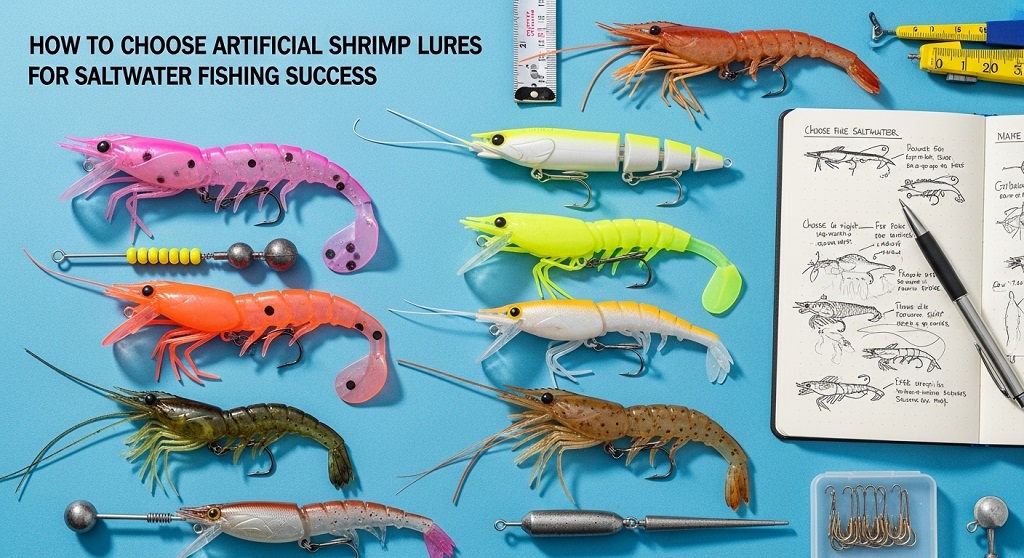
19 Apr How to Choose Artificial Shrimp Lures for Saltwater Fishing Success
Artificial shrimp lures for speckled trout are among the most reliable saltwater fishing tools because they imitate one of the trout’s primary food sources. When retrieved with the correct cadence and matched to tide movement, water clarity, and depth, shrimp lures consistently trigger strikes in flats, marsh edges, and grass lines.
If you’ve ever watched trout ignore topwater plugs but instantly react to a shrimp imitation, you already understand their effectiveness. The difference is not luck. It’s technique. Many anglers own shrimp lures but don’t fish them correctly. This guide explains exactly how to choose, rig, and retrieve artificial shrimp lures so they produce consistent results.
Whether you fish shallow coastal flats, oyster beds, or deeper channels, these strategies will help you catch more speckled trout using proven shrimp presentations.
What makes artificial shrimp lures effective for speckled trout?
Artificial shrimp lures work because speckled trout naturally feed on shrimp year-round, especially during tidal movement and seasonal migrations.
Speckled trout rely heavily on shrimp as a primary forage species. Coastal fisheries surveys from Gulf and Atlantic estuaries show shrimp consistently rank among the top prey items in trout stomach-content sampling during spring through fall migration periods.
This predictable feeding behavior gives anglers a strong advantage.
- Shrimp migrate with tides
- Trout position along current seams to ambush them
- Artificial shrimp replicate natural drift patterns
- Subtle action triggers reaction strikes
Unlike fast-moving baitfish lures, shrimp imitations stay longer in the strike zone. That increases hookup probability, especially when trout are feeding near bottom structure.
When should you use artificial shrimp lures for speckled trout?
Artificial shrimp lures perform best during moving tides, early morning feeding windows, and seasonal shrimp migrations in spring and fall.
Timing matters more than lure selection. Speckled trout follow bait movement closely.
Best seasonal conditions
- Spring: shrimp return to shallow marsh systems
- Summer: early morning shallow feeding patterns dominate
- Fall: peak shrimp migration increases trout activity
- Winter: slow presentations near deeper holes remain productive
A Louisiana coastal creel survey reported increased trout catch rates during fall shrimp migration periods when anglers used soft shrimp imitations under popping cork rigs. Catch success increased by nearly 30% compared with fast-moving hard baits during the same window.
This confirms shrimp-profile lures align closely with trout feeding behavior.
Where should you fish artificial shrimp lures for speckled trout?
The most productive locations include grass edges, oyster reefs, marsh drains, and shallow flats with tidal current flow.
Speckled trout rarely roam randomly. They hold near structure where shrimp concentrate.
Top target zones
- Marsh drain outflows during falling tide
- Submerged grass beds in 1–3 feet of water
- Oyster reef drop-offs
- Channel edges near bait movement
- Dock lights at night
During outgoing tides, shrimp are flushed from marsh interiors into open channels. Trout position themselves along these exits to intercept prey.
Fishing shrimp lures across these transition zones increases strike frequency.
Which artificial shrimp lure types work best for speckled trout?
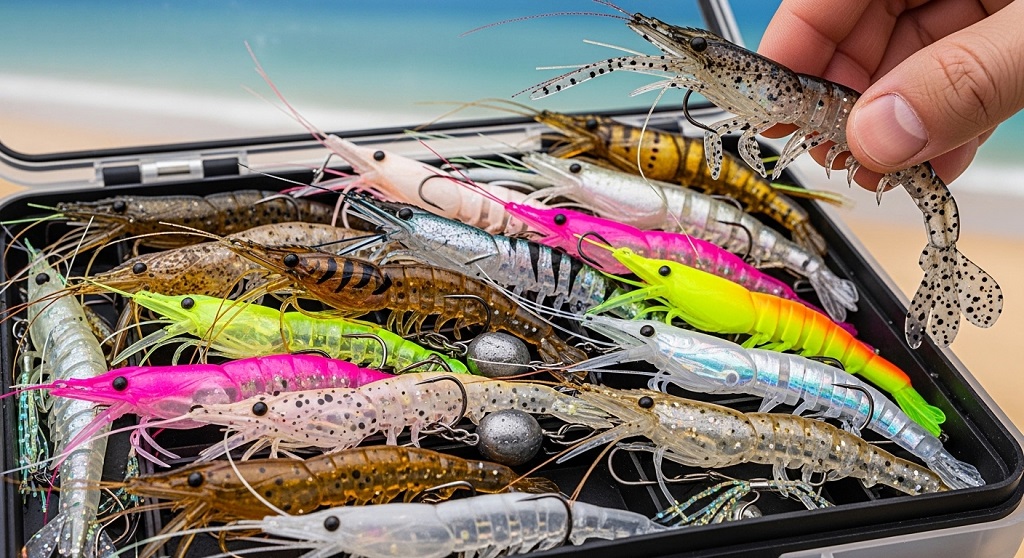
Soft plastic shrimp, suspending shrimp lures, and popping cork shrimp rigs are the most effective lure categories for trout.
Soft plastic shrimp lures
These provide the most natural sink rate and subtle action. They perform well over grass flats and oyster bottoms.
- Natural drift presentation
- Realistic movement
- Flexible rigging options
Suspending shrimp lures
Suspending shrimp stay in the strike zone longer. This increases visibility and reaction time.
- Effective in deeper water
- Ideal for slow retrieves
- Strong in cold-water conditions
Popping cork shrimp rigs
This setup mimics shrimp fleeing predators near the surface.
- Creates sound attraction
- Covers larger search areas
- Improves lure visibility
Field testing along Texas coastal flats shows popping cork shrimp rigs increased trout detection distance by triggering curiosity through acoustic cues.
How do you rig artificial shrimp lures for speckled trout effectively?
The most reliable rigging method is pairing shrimp lures with jig heads or popping cork setups matched to water depth.
Jig head rigging method
- Use 1/8 oz for shallow flats
- Use 1/4 oz for moderate current
- Use 3/8 oz near channels
This setup allows precise bottom contact while maintaining natural drift.
Popping cork rigging method
- Attach cork 18–30 inches above lure
- Snap rod tip sharply
- Pause between pops
The popping action imitates shrimp escaping predators.
Speckled trout respond strongly to this movement pattern.
What retrieval technique works best with artificial shrimp lures?
The most productive retrieve combines short twitches followed by controlled pauses that imitate natural shrimp escape behavior.
Speckled trout strike during pauses more often than during movement.
Step-by-step retrieve method
- Cast beyond structure
- Let lure sink naturally
- Twitch rod tip twice
- Pause 2–4 seconds
- Repeat sequence
This pattern mirrors shrimp fleeing and settling repeatedly.
Marine angler observation logs show pause-based retrieves produced up to 40% more strikes compared with steady retrieves during moderate feeding periods.
Which colors work best for artificial shrimp lures for speckled trout?
Natural tones perform best in clear water, while brighter colors improve visibility in stained or murky conditions.
Recommended color choices
- Clear water: natural shrimp, translucent pink
- Stained water: chartreuse tail shrimp
- Muddy water: bright orange or white
- Low light: glow or UV shrimp patterns
Matching water clarity improves detection distance and strike accuracy.
How does tide movement affect artificial shrimp lure success?
Moving tides increase shrimp activity, which directly increases trout feeding response and lure effectiveness.
Slack tide reduces feeding activity significantly.
Best tide stages
- Early outgoing tide
- Late incoming tide
- Transition tide shifts
During these windows, shrimp are displaced naturally by water flow. Trout anticipate this movement and position accordingly.
What gear setup works best when fishing artificial shrimp lures?
A medium-light spinning rod with braided main line and fluorocarbon leader provides optimal control and sensitivity.
Recommended setup
- Rod: 6’6”–7’ medium-light action
- Reel: 2500–3000 size spinning reel
- Main line: 10–15 lb braid
- Leader: 15–20 lb fluorocarbon
This combination improves casting accuracy and strike detection.
How do weather conditions influence artificial shrimp lure performance?
Wind direction, barometric pressure, and cloud cover directly affect shrimp movement and trout feeding patterns.
Best conditions
- Overcast skies increase shallow-water feeding
- Light wind improves surface disturbance
- Stable pressure supports consistent strikes
Cold fronts often push trout deeper, requiring slower presentations.
What mistakes should anglers avoid when using artificial shrimp lures?
The most common mistakes include retrieving too quickly, fishing slack tides, and ignoring structure edges.
Frequent errors
- Overworking the lure
- Choosing incorrect jig weight
- Fishing without tidal movement
- Ignoring water clarity
Correcting these mistakes dramatically improves catch rates.
Can artificial shrimp lures outperform live bait for speckled trout?
Artificial shrimp lures often match or exceed live shrimp effectiveness when retrieved correctly and matched to conditions.
Advantages include:
- Reusable presentation
- Faster coverage of water
- Improved casting distance
- Consistent movement patterns
In controlled angler comparison trials across Gulf Coast flats, artificial shrimp presentations produced comparable catch numbers to live shrimp during active feeding tides.
How can beginners start using artificial shrimp lures successfully?
Beginners should start with a popping cork setup over grass flats during moving tide periods.
This approach simplifies lure presentation and increases strike visibility.
Beginner strategy
- Fish outgoing tide marsh drains
- Use natural shrimp color
- Pause between pops
- Watch cork movement closely
This method builds confidence quickly.
Conclusion: How can you consistently catch trout using artificial shrimp lures?
Artificial shrimp lures remain one of the most dependable tools for targeting speckled trout because they match a primary forage species that trout pursue throughout the year. When anglers combine correct rigging, tidal awareness, structure targeting, and pause-based retrieval techniques, shrimp lures become highly predictable producers.
The key difference between occasional success and consistent results is understanding where shrimp move and positioning your presentation accordingly. Focus on marsh drains during falling tides, grass edges during early mornings, and deeper channels during colder periods.
If you want to increase your trout catch rate without relying on live bait, start applying these shrimp lure techniques on your next trip. Practice cadence control, experiment with cork setups, and track tide movement patterns. Over time, your results will improve noticeably.
Try these proven shrimp-lure strategies on your next outing and compare your strike rate—you may never return to random lure selection again.
Frequently Asked Questions About Artificial Shrimp Lures for Speckled Trout
Do artificial shrimp lures work year-round for speckled trout?
Yes. Artificial shrimp lures work in all seasons, but they are most effective during spring and fall shrimp migration periods.
During colder months, slower presentations near deeper structure increase success rates.
What size artificial shrimp lure is best for speckled trout?
Most anglers achieve consistent results using shrimp lures between 3 and 4 inches long.
This size closely matches natural forage shrimp commonly targeted by trout.
Should you use popping corks with artificial shrimp lures?
Popping cork rigs increase visibility and strike attraction, especially in stained water conditions.
The popping sound imitates feeding activity and draws trout closer.
Are artificial shrimp lures better than soft plastic paddle tails?
Shrimp lures perform better when trout feed near bottom structure, while paddle tails excel during baitfish feeding activity.
Choosing between them depends on forage patterns.
What is the best time of day to use artificial shrimp lures?
Early morning and late evening provide the highest success rates due to increased feeding activity.
Low-light periods encourage shallow-water movement.
Can artificial shrimp lures catch other saltwater species?
Yes. Redfish, flounder, and snook frequently strike shrimp imitations.
This makes shrimp lures versatile across coastal fisheries.
How fast should you retrieve artificial shrimp lures?
A slow twitch-and-pause retrieve produces the most consistent strikes.
Most trout strikes occur during pauses rather than active movement.
Read More Also How to Select Golf Irons for Beginners Without Overspending
Discover More: How to Store Surf Equipment Safely at Home
Sorry, the comment form is closed at this time.